Adım Adım Amasya

Monuments of the city · Mosque

Şirvanlı (Azeriler) Mosque

Most of Amasya's mosques were built by a pasha, a vizier or a sultan. This one was built by disciples — its money was collected in Dagestan, and it was raised over the grave of their sheikh, who died in exile.

1887–1893 Mir Hamza Nigârî North bank
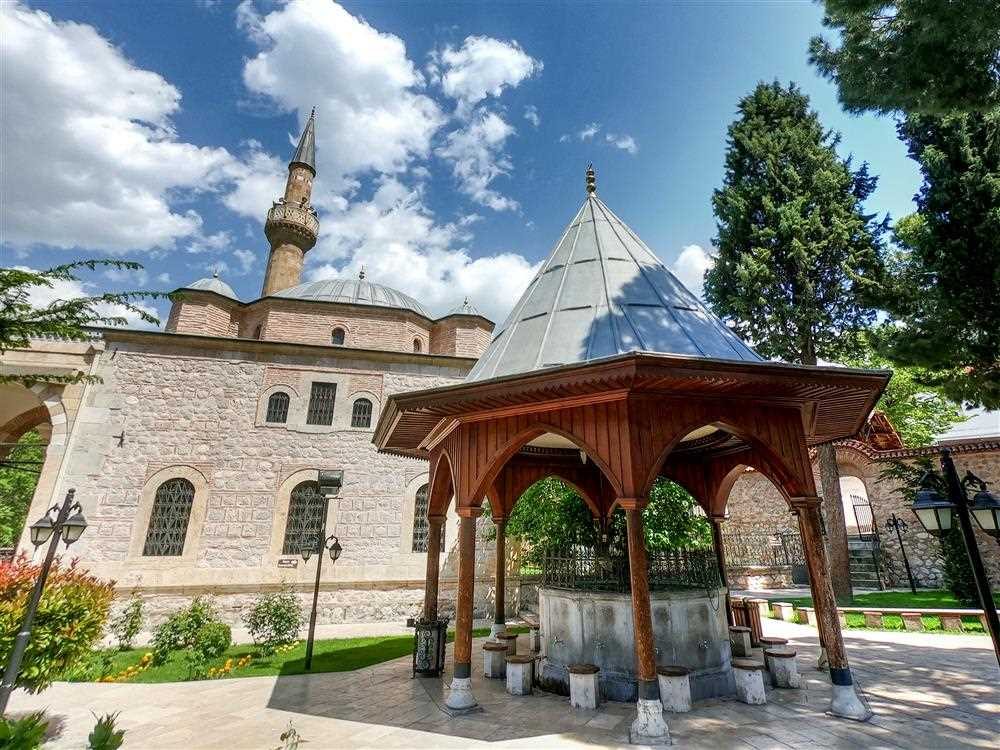
Şirvanlı (Azeriler) Mosque: dressed-stone body, lead-covered dome and small domes at its four corners
Şirvanlı Mosque. Kültür Portalı (Kültürel Miras Boyutuyla Amasya, Photo 16).

📜 What do the documents say?

The mosque was built in memory of Şeyh Hamza-i Nigârî, between 1887 and 1893. The money for the building was collected through the efforts and under the guidance of Hacı Mahmud Efendi, Nigârî's deputy (halife) in Dagestan.1, 2

The sum collected was 4,000 lira, and it was sent from Dagestan to Amasya. With this money a stone mosque was built, with a tomb for the deceased beside it, and a madrasa of 24 cells where students devoted themselves to learning day and night.1, 2 The mosque's dome is covered with lead.1

An exception in Amasya. Uzundal records that among the mosques in the city centre, only the Azeriler Mosque was built in the reign of Sultan Abdülhamid II.2 So this building appeared long after Amasya's age of mosque-building, and for an entirely different reason.

Two names, two different jobs

Two names appear alongside the mosque in the sources, and at first sight they seem to contradict each other. They do not: the two men did two different jobs.2

Collected the money

Hacı Mahmud Efendi

Nigârî's deputy in Dagestan. The 4,000 lira was gathered through his efforts and guidance, and sent to Amasya.1, 2

Oversaw the building

Mir Hasan Efendi

One of Hamza Efendi's followers, a well-known scholar. The mosque, the tomb and the madrasa were built under his supervision.2 In Uzundal's table of mosques, this is the name written as founder.2

4,000 liraThe money collected in Dagestan2
24 cellsStudents' rooms in the madrasa1, 2
1The only mosque in central Amasya built in the reign of Abdülhamid II2

So who was Mir Hamza Nigârî?

This mosque was built in memory of one man. His coming to Amasya was not his own choice.

He says that he has abandoned the views of the four schools of law, that he is neither Sunni nor Shiite, but a pure Muslim.

From Nigârî's own work, the Dîvân-ı Seyyid Nigârî, as quoted by Tolga Aydın. Aydın also notes that Nigârî, a Nakşibendî–Hâlidî sheikh, was a distinctive figure who stood outside this line.3

That is why the mosque tells a different story. While most of Amasya's mosques were built by a statesman or one of the state's leading men, the Şirvanlı Mosque was built in the name of a spiritual master, by his admirers and disciples.4 It was devotion, not the state, that raised these stones.

🏛️ What is the building like?

The mosque is square in plan; it is covered by a dome whose transition is made with corner squinches. Seen from outside, there is a small dome at each of the dome's four corners.5

On the north side, a late-comers' portico was formed with four columns linked by three pointed arches, and roofed with a dome.5 The building is of hewn stone and has a minaret.2

Its neighbourhood: Kemaloğlu places the building in the Beyazıt Paşa neighbourhood.5

The sources diverge on the date

In a long building campaign, a building's “date of construction” depends on where you look: the year the money was collected, the year the foundations were laid, or the year it was finished?

The Key facts say 1887–1893: this is the range on which the book and Uzundal agree.1, 2 The others are not being deleted; they stand above. All four describe the same event, catching it at different moments.

While you are there, look for

Key facts

Built
1887–18931, 2 (the sources also record 1873–1895, AH 1304 and 18943, 4, 5)
In memory of
Şeyh Mir Hamza Nigârî1, 4
Collected the money
Hacı Mahmud Efendi — his deputy in Dagestan1, 2
Oversaw the building
Mir Hasan Efendi2
Parts
Mosque, tomb and a madrasa of 24 cells1, 2
Plan
Square; dome on corner squinches, small domes at the four corners; late-comers' portico on four columns5
Material
Hewn stone; dome covered with lead1, 2
Other names
Azeriler Camii · Şirvanlılar Camii · Şeyh Hacı Hamza-i Nigârî Camii2
Location
40.65643, 35.838045 — verified against OpenStreetMap
In the book
Kültürel Miras Boyutuyla Amasya, p. 43

📍 Open on the map

Sources

  1. Kültürel Miras Boyutuyla Amasya (Amasya: Amasya Üniversitesi, BAP Projesi SEB-BAP25-0233, 2026), 43.
  2. Edip Uzundal, Sultan II. Abdülhamid Dönemi'nde Amasya Sancağı (Tokat: Gaziosmanpaşa Üniversitesi Sosyal Bilimler Enstitüsü, Doktora Tezi), 166-167. — The 4,000 lira collected in Dagestan, the guidance of Hacı Mahmud Efendi, the building carried out under the supervision of Mir Hasan Efendi, the madrasa of 24 cells, and the building's being the only Amasya mosque built in the reign of Abdülhamid II.
  3. Tolga Aydın, Amasya Tekkeleri (Bursa: Bursa Uludağ Üniversitesi Sosyal Bilimler Enstitüsü, Yüksek Lisans Tezi, 2019), 78. — Nigârî's arrival at Harput on 30 May 1885, his death in exile in 1886, the bringing of his body to Amasya in accordance with his will, and the words quoted from the Dîvân-ı Seyyid Nigârî.
  4. Amasya Valiliği, Amasya Şehir Rehberi (Amasya: Amasya Valiliği, 2013), 30-31. — That the mosque was built not by a statesman but by a spiritual master's admirers and disciples; the range 1873-1895; the record that Nigârî's grave was made on the plot of a house.
  5. Zeynep Kemaloğlu, Amasya Mihrabları (Kayseri: Erciyes Üniversitesi Sosyal Bilimler Enstitüsü, Yüksek Lisans Tezi, 2016), 275. — The date AH 1304 (1886-1887), and Karamanlı Mahmut Hazretleri and his sons as those who had it built; the mosque's square plan, corner squinches, four small domes and late-comers' portico.