In the 19th century, Germans and Swiss came to Amasya. They founded a silk
factory, bought a farm and set out to open a school. In the end, this is what
happened: they became Amasyans.
19th centurySilk productionColonisation and missionary work
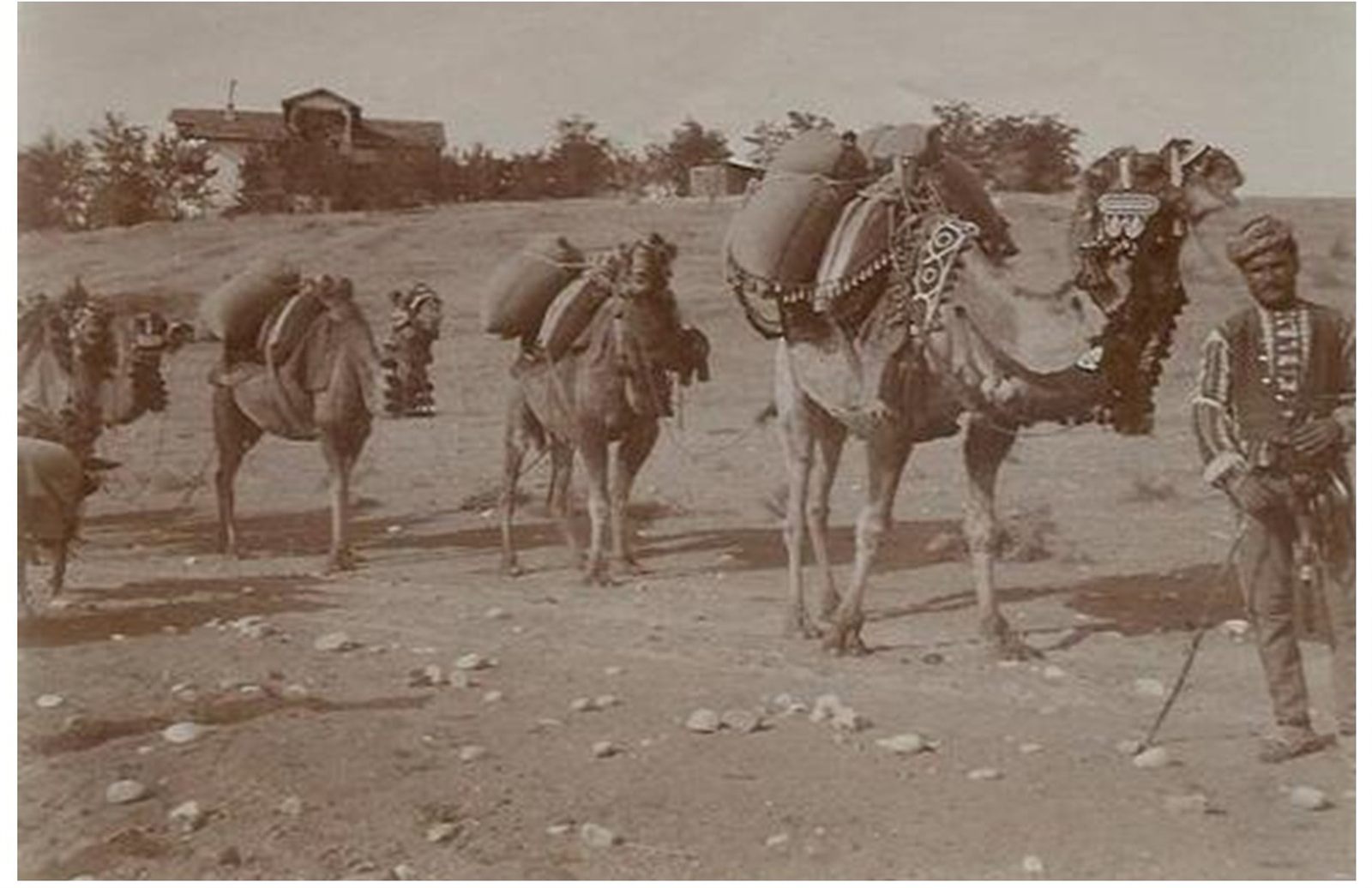
A camel caravan carrying loads taken on at the Alaman Farm.
Behind, on the ridge, the farm buildings can be seen.
Hüseyin Menç Archive.
📜 What do the documents say?
In the second half of the 19th century, German and Swiss colonists —
above all George Krug and Metz — had a major influence on
Amasya's economy. By founding modern, steam-powered silk-cocoon
factories equipped with European techniques, a match factory and
flour mills, these entrepreneurs raised the city's agriculture and
industry to European standards.1
In the Amasya silk factory of a trading firm based in Freiburg, in the
German state of Baden, hundreds of girls and boys of different faiths
worked at opening silkworm cocoons — because children's delicate
hands were well suited to the task.2
The German geographer Heinrich Barth, who came to the city in 1858,
saw Krug's office in the Taşhan: producers and villagers were queuing to
sell their silk. Krug had formerly been the Amasya agent of the
Freiburg-based silk house of the Meez family; by now he had opened
businesses in his own name. His house was built in the Swiss
architectural style, on a high spur where a small river meets the
Yeşilırmak.3
1865: the governor visits the factory
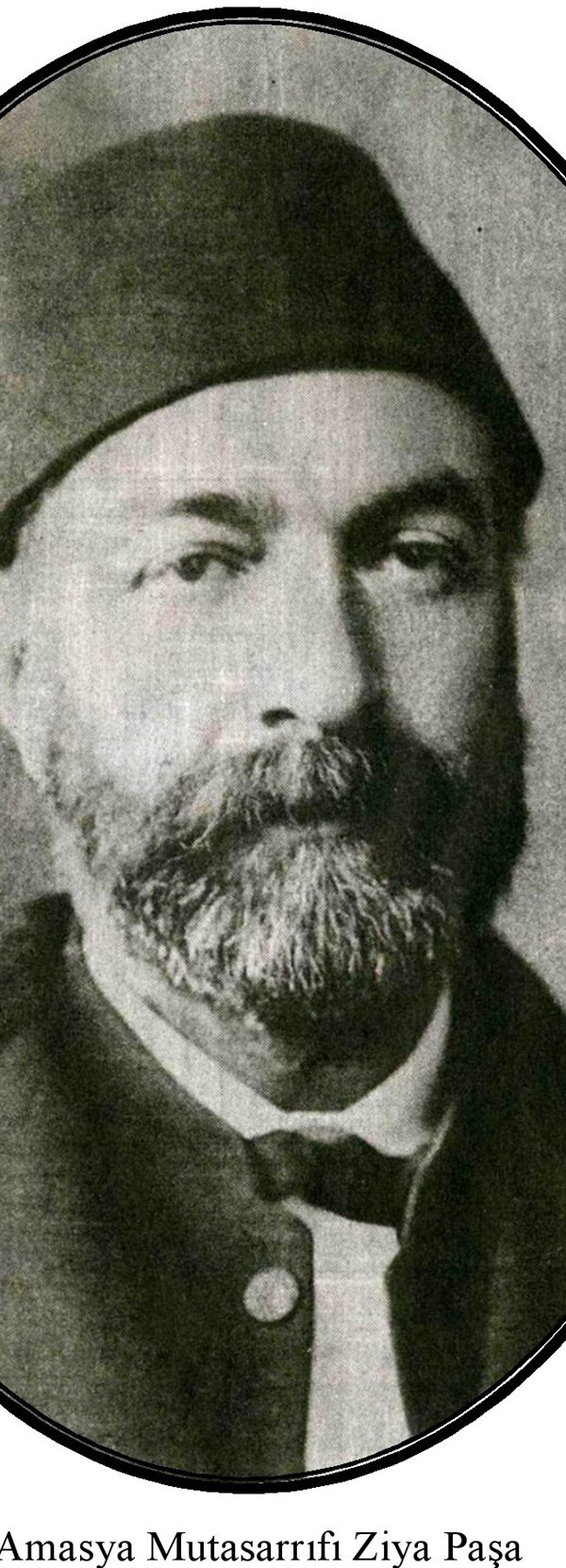
In 1865 Ziya Paşa, the governor (mutasarrıf) of Amasya, inspected
Mez's silk factory together with the city's notables and the
ulema.2
Ziya Paşa, governor of Amasya. Hüseyin Menç Archive.
Two things caught his attention as he toured the factory. The first was that
the silkworms inside the cocoons were killed with steam; he
objected to this strongly.
The second was graver: the boys and girls he watched were made to sing
according to Christian traditions while they worked. On the grounds that
this innocent-looking practice would in time cause irreparable corruption
among Muslim families, he ordered the Turkish girls to leave work at
once. What is more, he banned the employment of Muslim children among
the factory's workers.2
Some foreigners interpreted this as follows: “as a Turk with a strict
sense of morality, he could not tolerate it”. According to Menç,
these measures of Ziya Bey checked the influence of Evangelical Christian
propaganda.2
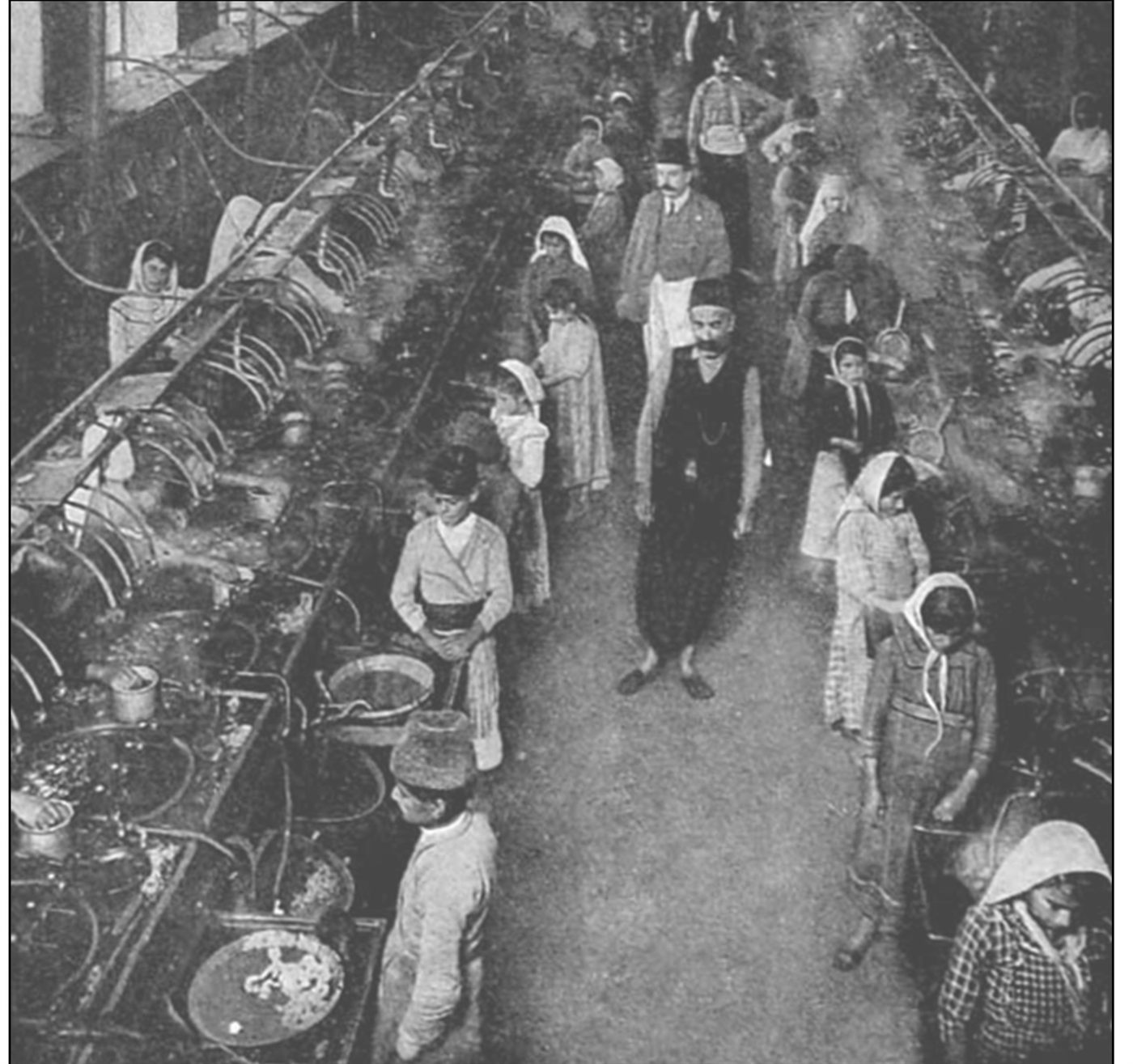
Inside the silk factory in Amasya. Women and children work along two rows of
troughs; two overseers walk down the aisle between them.
Hüseyin Menç Archive — red-toned in the book's printing,
converted to greyscale here.
The farm: who, how much, for what price?
The figures below come from Ottoman archival documents.4
(A dönüm is an Ottoman unit of land; a kuruş, a unit of currency.)
1,600 dönümFrom the land of the Atabey Farm, in the name of the preacher Brokse, for 65,000 kuruş.
480 dönümAgain from the same farm, from Tatyos of the Armenian community, for 22,000 kuruş.
540 dönümAt Tuzsuz, in the name of Monsieur Haksher, for 28,000 kuruş.
2,620 dönümTotal land sold — 115,000 kuruş. The title deeds were issued.
Finally, 460 dönüm held by Circassian immigrants in the village of Kutu
were bargained over for 62,000 kuruş — but the sale was never
completed, and no deed was issued.4
According to the document, the land was state-owned (miri) land;
lying close to the stream, it flooded in the seasons when the water rose, and
part of it was used as meadow and mown for hay. On the rest, barley, wheat and
maize were grown with European tools and implements.4
Apart from the German owners and stewards and the blacksmiths, carpenters,
butter- and cheese-makers, the farm had no foreign servants. Everyone
working as a labourer was an Ottoman subject, employed for wages: Muslim
people from the surrounding villages, some Greeks from Sivas, and Armenians and
Greeks from Amasya.4
After buying the farm, the Germans added to the existing buildings two
straw barns, three hay barns, a large building containing a bakehouse and a
kitchen, and two farmers' quarters.4
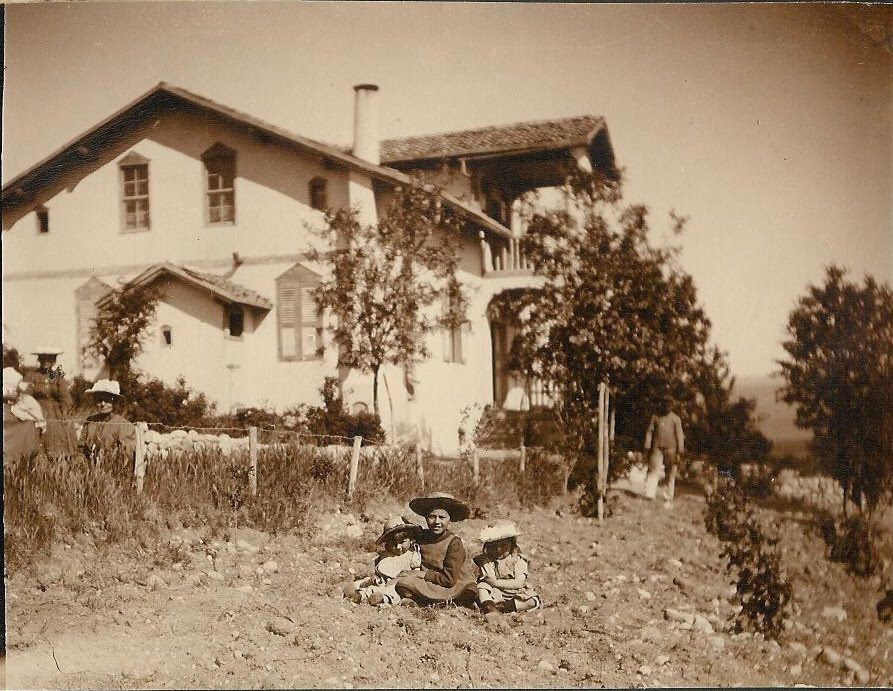
The farmhouse: wide eaves, a balcony, shuttered windows — it fits the
description “Swiss architectural style” that Barth used for Krug's
house.3Old Amasya archive.
The archive label gives 1840; since the documents date the Germans'
activities in Amasya to later decades, that date is not used here.
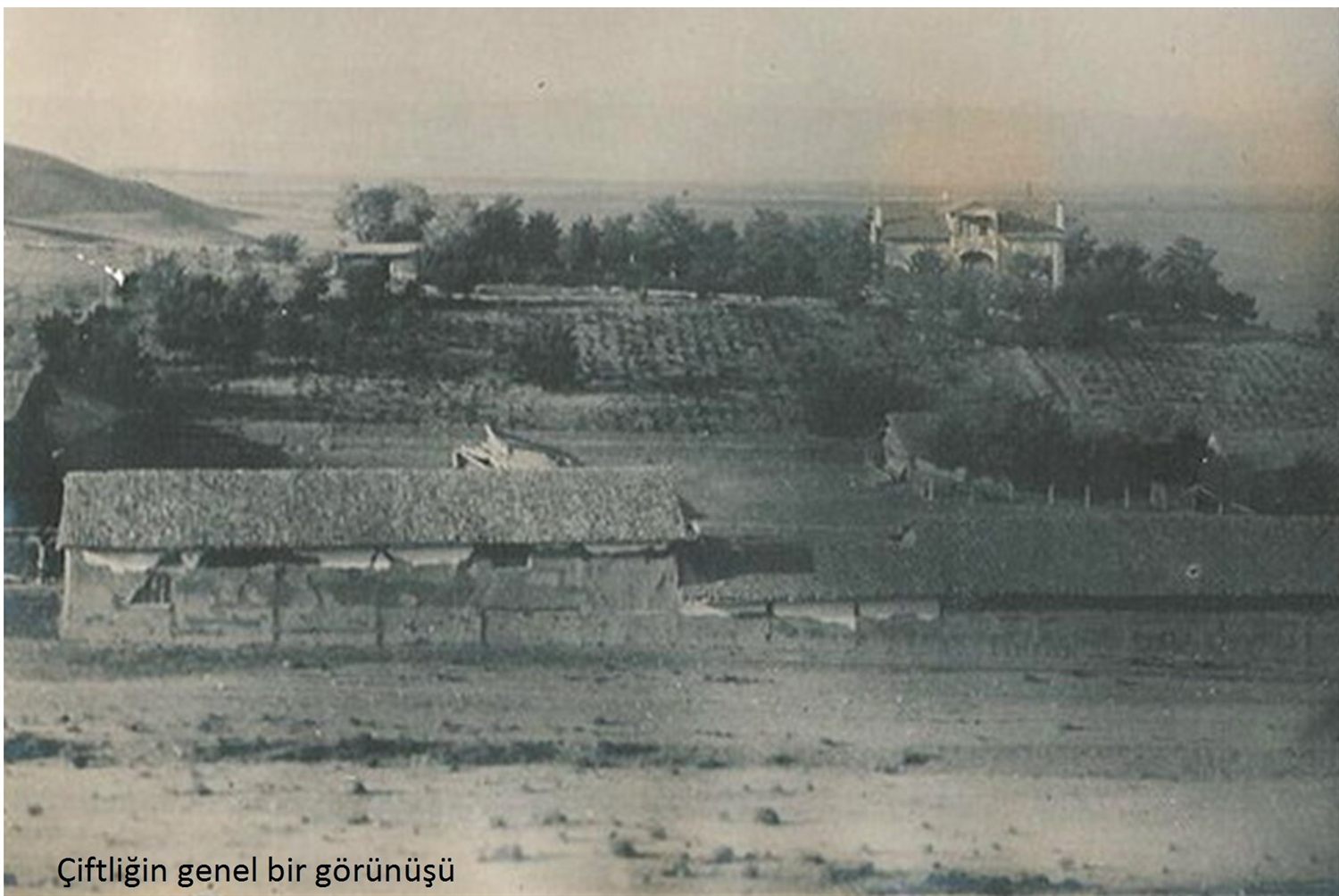
A general view of the farm. A long building in front; behind it,
terraced vineyards and a pavilion among the trees.
Hüseyin Menç Archive.
The school on the farm and the state's reaction
To give agricultural training based on scientific methods, the Germans
gathered orphaned Armenian children on the farm and began teaching them.
But the farm's poor climate made the children ill. Moreover, opening
a school or a church without a licence was forbidden by law; on a warning
from the province of Sivas the teaching was ended and the children were sent
back to their families.4
The state's concern is set out plainly in the documents: foreign immigrants
were being settled at random on land bought by foreigners, and the population
structure of the region was changing. It was essential that important places —
castles, fortifications, borders and military positions — should remain in the
hands of Ottoman subjects. While no objection was seen to the Germans buying a
farm for agriculture, their teaching in breach of the education regulations
and their founding of unlicensed schools were not accepted.4
The outcome: it was decided not to permit unlicensed schools or buildings; it
was requested that the sale in Kutu village should not go ahead and that, if
necessary, the land should be bought by the Government by paying its
price. And the chief clerk of the Defter-i Hakanî (the land registry) of
Amasya, held negligent in letting the Germans acquire so much land in
Amasya, was put on trial.4
Two names: Alaman or Atabey?
The name used by the people and the archive
The pictures in the photographic archive and Hüseyin Menç's book call this
place “Alaman Çiftliği” (the Alaman — German — Farm).
Menç writes that the farm was run under Krug's management.2
The name in the documents
In the Ottoman archival documents and academic studies, the land is called the
Atabey Farm (Atabey Çiftliği).4 The title of the article
that studies it is: “Alman Kolonyal Politikaları ve Protestan
Misyonerliği İçin Bir Örnek: Amasya Atabey Çiftliği (1879-1919)”
[An Example of German Colonial Policies and Protestant Missionary Activity:
The Atabey Farm in Amasya].5
The sources we have do not state outright that these two names refer to the
same place — so this page does not say so. But one thing is certain:
Kültürel Miras Boyutuyla Amasya cites this very study of the Atabey
Farm as the source of its sentence about the German and Swiss
colonists.1, 5
The story ends quite differently
The fate of those who came to bring Christianity to Amasya was recorded by the
German traveller Ernst von der Nahmer, who came to the city in 1898:
“Apart from Krug, all who came forgot their German origins, their German
consciousness, their religion and their culture. They married Armenian and
Turkish Muslim girls. Some turned to Protestantism, some to Islam. They became the
sons-in-law of Armenians and Turks. Little by little they lost their Germanness,
until nothing German was left to them but their surnames. Their children, too,
forgot German. They came to resemble the Levantines of Turkey.
In short, they became Amasyans.”
Ernst von der Nahmer, 1898 — as quoted by Menç; our English
translation of the Turkish rendering (the original is in German).2
Nahmer nonetheless thought well of the Germans who had become Amasyans:
“They all became honest, hard-working, dignified people who respected Amasya
and its surroundings and were loved by the people here.” He wrote that
they had founded modern businesses in blacksmithing, milling and the production of
modern silk thread, and had raised the region's standard of living. But he added:
“Yet their forgetting their national identity, their language and their
religion is not a forgivable fault.”2
Who bought the factory?
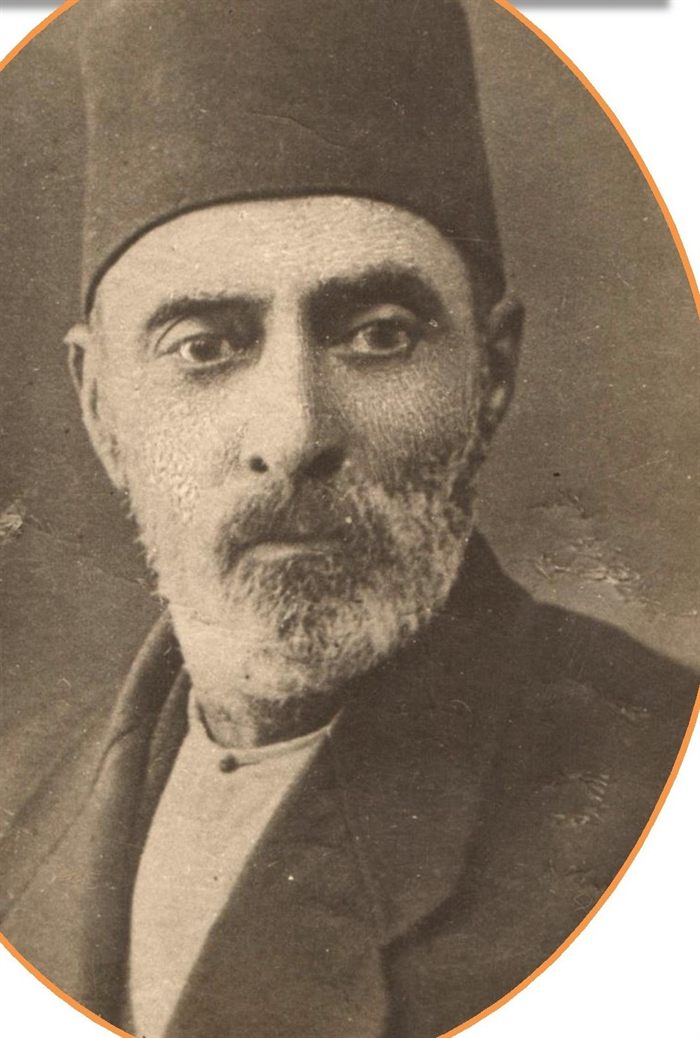
Osmanzade Akif Bey (Tohumcu).
The caption written beneath the picture reads: “Osmanzade Akif Bey, who
bought the silk factory the Germans had founded in Amasya.” Hüseyin Menç Archive.
He was the child of a family of the Kabatay clan, which had been
forced to migrate from the Caucasus to Anatolia. With what wealth it could
save, the family came to Amasya and settled there.2
He first worked as a labourer in the factory the Germans had founded.
There he learned the finer points of the trade — and he became an important
actor in the passing of Amasya's silk industry from the Germans to
Muslims.2
When the Germans' presence and strength declined and they could no longer
keep the wheels of their great investments turning, Akif Bey bought, at
public auction, the silk works the Germans had founded in
Amasya.2
Then he did the harder thing. To end the poor quality of the produce of Amasya's
traditional sericulture, he set out for China, the home of silkworm
breeding: from Samsun to Istanbul, and from there by a sea voyage lasting
months to China. He came back with silkworm eggs of the highest quality.2
For years to come, the “Amasya Silk” brand, of matchless quality,
was sold to merchants from home and abroad at the “Böcekhane”
(the silkworm house). The income from these sales was paid to the Amasya
governorate under the name “Harir Tohumu Rusumu” (the silkworm-egg
duty). For producing silk with scientific, modern techniques, he was awarded a
gold decoration by Abdülhamid II.2
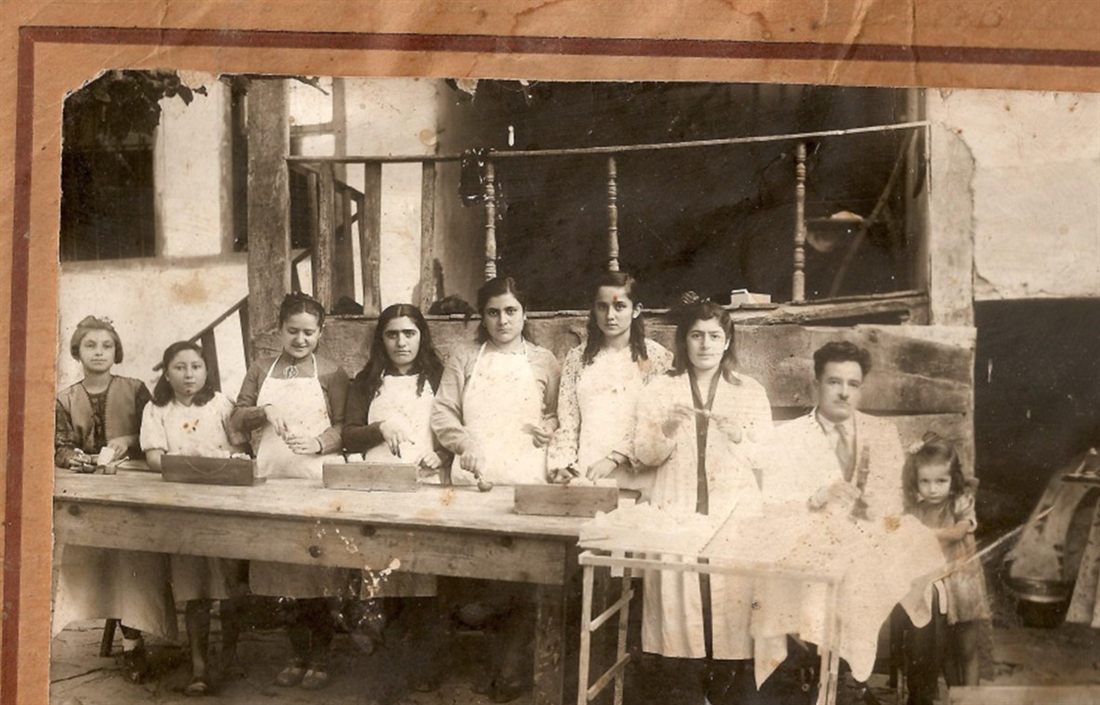
Silk workers in Amasya. Hüseyin Menç Archive.
After Akif Bey, the Tohumcu family founded a flour mill and leather and tanning
businesses. His sons Kemal, Nahit, Ali and Besim took the surname
Tohumcu (“seed-maker”) from their father's trade. Kemal Tohumcu was
educated at the French Jesuit College in Amasya.2
And the part that will interest teachers: because silkworm-egg production and
sericulture had advanced so far in Amasya, sericulture lessons were taught
in the middle school in 1944.2
In order
1850s
Krug, Amasya agent of the Freiburg-based Meez/Mez silk house, is
at work; he has an office in the Taşhan.3
1858
The German geographer Heinrich Barth comes to Amasya and stays as
Krug's guest; he describes his house and the city.3
1865
Governor Ziya Paşa inspects the factory; he orders the Turkish girls
to be dismissed and Muslim children not to be employed.2
1879–1919
The documented period of German colonial and missionary activity on the
Atabey Farm.5
1898
Ernst von der Nahmer comes to Amasya and records that the Germans have
become Amasyans.2
1901–04
The land purchases, the teaching of orphaned Armenian children on the farm
and the state's intervention appear in Ottoman archival documents.4
later
Osmanzade Akif Bey buys the silk works at auction; brings eggs
from China; receives a gold decoration from Abdülhamid II.2
1944
Sericulture lessons are taught in the middle school in
Amasya.2
This stop has no coordinates. Because the farm's present location and the state of its remains have not been verified by fieldwork, no coordinates are given on this page.
Sources
Every factual statement on this page rests on one of the sources below.
Titles are given in their original Turkish so that they can be found;
quotations from them are our translations.
Kültürel Miras Boyutuyla Amasya (Amasya: Amasya Üniversitesi, BAP Projesi SEB-BAP25-0233, 2026), 21-24. — The “Osmanlı Dönemi Amasya” chapter; the German and
Swiss colonists (George Krug and Metz) appear here.
Hüseyin Menç, Tarih İçinde Amasya (Amasya: Amasya Belediyesi, 2014), 243, 249. — Two sections:
p. 243 “İpekçilikte Türk Ekolünü Başlatan Osmanzade Akif Bey (Tohumcu)”;
p. 249 “1865'te Amasya Mutasarrıfı Ziya Paşa'nın tedbirleri, misyonerlik
çemberindeki genç kızlarımızı kurtarmıştı” (Menç bases this section on pp. 305-308 of source no. 3).
Ali Tuzcu, Seyahatnâmelerde Amasya (Amasya: Amasya Belediyesi Kültür Yayınları, 2007), 196-198. — The “Amasya'nın Alamanları: Dr. Heinrich Barth” section.
Edip Uzundal, Sultan II. Abdülhamid Dönemi'nde Amasya Sancağı (Sosyal, Ekonomik, İdarî ve Demografik Yapı) (Tokat: Gaziosmanpaşa Üniversitesi Sosyal Bilimler Enstitüsü, Doktora Tezi, 2017), 225-226. — Based on documents in the Ottoman Archives of the Prime Ministry
(BOA. BEO. 1892/141887; BOA. BEO. 2256/169155; BOA. Y.A.RES. 121/78).
Hadi Belge, “Alman Kolonyal Politikaları ve Protestan Misyonerliği İçin Bir Örnek: Amasya Atabey Çiftliği (1879-1919)”, History Studies 10/8 (Kasım 2018), 49-75.