Adım Adım Amasya

Monuments of the city · Mosque

Gümüşlü Mosque

This mosque burned three times. Each time someone else had it rebuilt. The building that stands today is the result of six hundred years of stubbornness.

AH 725 · 1324–1325 Popularly “Taciye” South bank
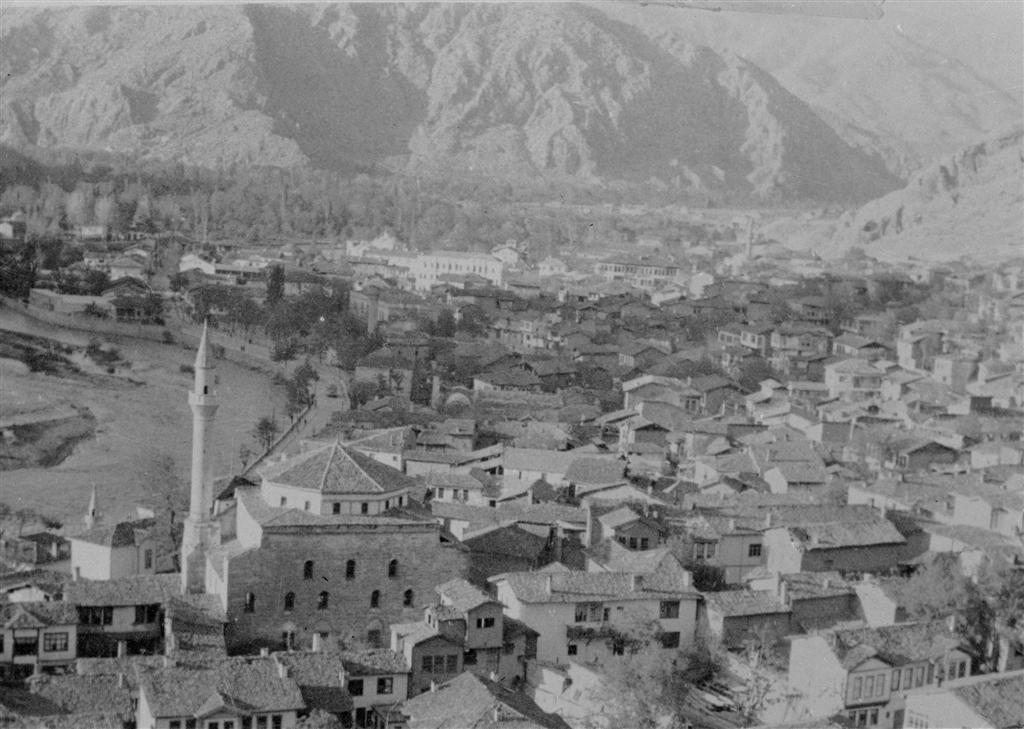
Gümüşlü Mosque: square prayer hall, dome and wooden late-comers' portico
Gümüşlü Mosque. Emir Gültekin Archive (Kültürel Miras Boyutuyla Amasya, Photo 7).

📜 What do the documents say?

The mosque was first built by Gümüşlüzade Tâceddin Mahmud Çelebi in the Hijri year 725. Among the people it became famous under the name “Taciye”, which comes from its founder's epithet.1, 2, 3

Why does it sometimes say 1324 and sometimes 1325? The Hijri year 725 corresponds in AD years to the end of 1324 and most of 1325. That is why the book says 1324–1325,1 while the sources mostly write simply 1325.2, 3 Both refer to the same Hijri year; it is not a contradiction.

The Gümüşlüzades were a family who led the spread and institutionalisation of Sufism in Amasya; this mosque is one of the most important of the buildings they commissioned.2

The mosque also had an official name. In the Ottoman archives, in land survey register (tapu tahrir defteri) no. 387, the building is recorded as “Gümüşoğlu Camii”.2, 3

Three fires, four repairs

The whole of this chain is written in the source on which the book itself relies.2

The 1612 fire is not in the book. The source on which the book relies in this section (Tolga Aydın) writes that there was another fire in 1612 and that the repair was commissioned by Şemsettin Paşa.2 This page has followed the source; the detail has been noted for addition to the book.

One inscription, three readings

The date of the rebuilding is written on the mosque's inscription in ebced (abjad) — that is, with the numerical values of letters. Reading such a date is open to interpretation, and researchers have drawn different years from the same stone.

Uzunçarşılı and H. Hüsameddin

AH 890 → 1485

This is how they read the abjad date in the inscription.3 It is also the year given by the book and by Aydın.1, 2

Osman Fevzi Olcay

AH 895

Quoting the inscription, Olcay writes that the mosque was built in the year 895; as its founder he again names Gümüşlüzade Ahmed Bey.4

Türkiye'de Vakıf Abideleri ve Eserleri

1491

This publication both gives a different date and records the founder as Defterdar Mahmut Bey.3

This page does not choose a reading. All three are published records. Because 1485 is the year on which the book and the largest number of sources agree, that is the year in the Key facts; the others stay here and are not deleted.

🏛️ What is the building like?

The mosque is built of dressed stone. It consists of a square main space and the volumes on either side of it, and is covered by a dome clad in roof tiles.2, 3 The minaret is built of brick.1, 5

The late-comers' portico has five bays. The central bay has a domical vault inside, the other bays have wooden ceilings inside; outside, the top is like a flat roof. The central bay is built with a triangular pediment. The wooden roof rests on five wooden columns.2

Directly opposite the late-comers' portico stands an octagonal ablution fountain. Each side of the octagon has a hipped roof; in the middle there is a slightly pointed conical cap, domed on the inside. The roofs rest on eight wooden columns.2

A detail was lost. Kuzucular records that the wooden late-comers' portico added at the beginning of the 20th century covers part of the mosque's entrance and that some of the muqarnas were left exposed.3 So the entrance you see today is not the whole of its original form.

While you are there, look for

Key facts

First built
AH 725 — AD 1324–13251, 2
Commissioned by
Gümüşlüzade Tâceddin Mahmud Çelebi1, 2
Other names
Taciye Camii1, 2 · Gümüşoğlu Camii (land survey register)2, 3
Rebuilt
1485, Gümüşlüzade Defterdar Ahmed Bey1, 2 (the sources also contain the readings AH 895 and 14913, 4)
Material
Dressed stone; minaret of brick1, 2, 5
Plan
Square prayer hall, additional volumes on either side, domed roof1, 3, 5
Late-comers' portico
Five bays, wooden; added in the 1903 repair1, 2
Location
40.652115, 35.834799 — verified against OpenStreetMap
In the book
Kültürel Miras Boyutuyla Amasya, p. 36

📍 Open on the map

Sources

  1. Kültürel Miras Boyutuyla Amasya (Amasya: Amasya Üniversitesi, BAP Projesi SEB-BAP25-0233, 2026), 36.
  2. Tolga Aydın, Amasya Tekkeleri (Bursa: Bursa Uludağ Üniversitesi Sosyal Bilimler Enstitüsü, Yüksek Lisans Tezi, 2019), 98. — The whole chain of fires and repairs, including the 1612 fire and the repair by Şemsettin Paşa; the description of the late-comers' portico and the ablution fountain.
  3. Kani Kuzucular, Amasya Kentinin Fiziksel Yapısının Tarihsel Gelişimi (İstanbul: İstanbul Teknik Üniversitesi Fen Bilimleri Enstitüsü, Doktora Tezi, 1994), 65-66. — The reading of the abjad date in the inscription as AH 890 (1485) by Uzunçarşılı and H. Hüsameddin; the record of 1491 and Defterdar Mahmut Bey in Türkiye'de Vakıf Abideleri ve Eserleri; land survey register no. 387; the wooden late-comers' portico covering the entrance.
  4. Osman Fevzi Olcay, Amasya Şehri (Amasya: Amasya Belediyesi, 2010), 147. — “Gümüşlü Camii Kitabesi” (the inscription of the Gümüşlü Mosque): founder Gümüşlüzade Ahmed Bey, date 895.
  5. Ersel Oltulu, Amasya'nın Anıtsal Eserleri ve Hızır Paşa Külliyesi Restitüsyon ve Koruma Önerisi (İstanbul: Yıldız Teknik Üniversitesi Fen Bilimleri Enstitüsü, Yüksek Lisans Tezi, 2006), 44. — The plan of the mosque.