Seven hundred years ago Ibn Battuta described this city by its gardens.
The garden is still on the table: broad beans, aubergines, quinces, sour cherries,
misket apples. Below are the eighty dishes of Amasya's cuisine.
Tap the name of any of them: a card opens telling you what it is, how it
is made and at which table it is served.
Afiyet olsun — enjoy your meal. Most of these dishes are home and
ceremonial food; you may not find every one of them in a restaurant. But knowing
the name when you ask is the difference between being a stranger in a city and
being its guest. The cards are summaries of the recipes in Amasya Mutfağı,
a book published by the Governorship of Amasya; for quantities and the full
recipe, see the book, which has an English text as well.
The esteemed guest's table: six dishes
In Amasya a guest who comes from elsewhere, and who usually stays the night, is
called an “ağır misafir” — literally a “weighty
guest”, an esteemed guest. At such a guest's table there are always six
dishes, and these six hardly ever change. Their order is fixed, too:1
The book describes the hospitality of the people of Amasya like this: if there is no
guest at the table at a meal, the host invites a poor person and shares the food
with them.
“In Amasya, being the guest is a greater honor than being the host.”1
(This sentence is quoted from the book's own English text.)
Food has its ceremonies too
Some dishes are not just a plate but a ceremony. When they are served, to
whom, and on which tray, is fixed.1
The velime meal
Popularly called “guya önü” — a corruption of güvey önü, “before the groom”.
It is for the couple on their wedding night. A single tray holds three
dishes: whole meat, pilaf and
tırtıl baklava. The dishes may vary, but the way they are
served does not: before the groom goes in, the tray is
handed to the bride at the door of the bridal chamber.
The wedding meal
Especially at village weddings.
At the wedding house, cauldrons of keşkek, pilaf, meat
and halva are set to boil. Tables are laid out on the flat roofs of the houses
and in the courtyards. Because finding and handing out spoons used to be difficult,
guests came with a wooden spoon tucked into their belt and sat down with
it. The meal is eaten together, to the sound of the davul drum and the
zurna pipe.
The bride's bath meal
The meal of the bathhouse ceremony at which the bride is introduced to the
family's relatives. Guests are invited to the hamam by the
“okuyucu kadın”, the woman sent round with the invitations;
a band of women musicians plays in the changing room of the bath. The meal is
bakla dolması, walnut puaça,
bat and lokma, eaten with dancing and singing on the warm
central platform of the bath.
By name
The book has eighty recipes; below are their names.
Some of them you cannot work out even when you hear them —
sakala çarpan çorba, eli böğründe, unutma beni — and that is
exactly where their charm lies. Tap a name and that dish's card opens.1
(Literally: “the soup that hits the beard”, “hand on
hip” and “forget me not”.) We have kept the names in
Turkish: they are the words you will need when you ask.
According to the book, this dessert is what the cream cake eaten in the
princes' palace became in the hands of a poor family: the home version of a
palace sweet.
Note: This is the account given in the book Amasya Mutfağı; we have
no document showing a link with the palace kitchen. We report what is said; we do
not claim that it has been verified.1
Its name sounds like a farewell, but its story is one of thrift: a dessert made so
that stale bread is not thrown away. Proof that what best describes a
city's cooking is not its feasts but what it does with the leftovers.
Dried broad beans are hard and not much to look at. The book describes mixing
those hard beans with various ingredients, combining them with meat and
rolling them one by one. In other words, the real ingredient of this dish
is patience.
One of the staple dishes of the Turks of Central Asia, and made in many parts of
Anatolia too. The book gives Amasya's keşkek a place of its own and passes on the
city's own claim:
“Put all the keşkeks on one side, and Amasya's keşkek on the other.”(“Bütün keşkekler bir yana, Amasya keşkeği bir yana.”)
— This is not a measurement but a boast. We quote it because it shows
how the people of Amasya see their own cooking.1
By season
The table changes with the season. In summer,
patlıcan pehlisi (aubergine pehli)
takes the place of the whole meat at the esteemed guest's table.1
The city's apples go into dessert as well: the recipe for
elma tatlısı (apple dessert) is made
with misket apples, a small local variety1 — so
the orchards Ibn Battuta saw in the 14th century are still on the plate.
What the travellers said →
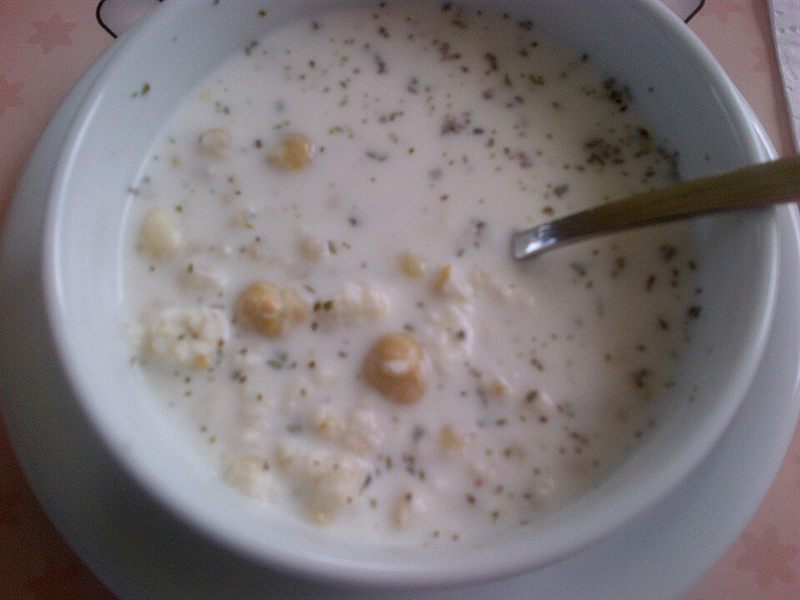
It is cooked in meat broth with strained yoghurt, yarma (coarsely cracked wheat), soaked chickpeas, an egg yolk and a spoonful of flour, stirred constantly until it boils. Butter sizzled with dried mint is poured over the top. Some add a clove of garlic.
At the table: The esteemed guest's table opens with this soup. It is also part of the thanksgiving meal given, when a pilgrim returns from the Hejaz, to those who had seen the pilgrim off (the hacı karşılama meal).
Source: Amasya Mutfağı, p. 6-8.
Soup
Çatal Çorba çatal soup
Green lentils are boiled, and when they begin to soften yarma (cracked wheat) is added. Onion and minced meat fried in another pan go in, and the soup boils for 5 minutes. Dried mint and red pepper flakes sizzled in butter are poured over it.
Source: Amasya Mutfağı, p. 9.
Soup
Kesme Hamur Çorbası (İbik Çorba) cut-dough soup, also called “crest soup”
A stiff dough of flour, egg and salt is rolled out and cut into strips, then into small squares half a centimetre across. These pieces are boiled with green lentils; when they are cooked, whisked strained yoghurt is tempered and stirred in. Butter sizzled with dried mint goes on top.
Source: Amasya Mutfağı, p. 10.
Soup
Helle Çorbası helle soup
Flour is toasted in butter and cold water is added; rice boiled separately in plenty of water goes into this roux. It is stirred without stopping until it boils and served sprinkled with black pepper. Its only ingredients are flour, butter, rice, water and black pepper.
Source: Amasya Mutfağı, p. 11.
Soup
Bıdıklı Çorba bıdıklı soup
Cracked wheat and fresh shelled beans cook in water until the wheat turns pinkish, and salt is added. Strained yoghurt is whisked and added to the soup slowly; if desired, butter sizzled with dried mint is poured on top.
Source: Amasya Mutfağı, p. 12.
Soup
Topal Börülce Çorbası topal börülce soup
Topal börülce (a kind of black-eyed pea) and cracked wheat are boiled in plenty of water. Diced onion fried in oil with kakırdak goes in. Kakırdak is made by frying diced sheep's tail fat until the fat runs off; the crisp bits are pounded with salt in a mortar. Mint sizzled in fat is drizzled over the top.
Source: Amasya Mutfağı, p. 13.
Soup
Sakala Çarpan Çorba “the soup that hits the beard”
Onion is fried in butter, flour is stirred in, and dried mint, salt and red pepper flakes are added. Water goes in and is brought to the boil; lentils cooked in advance and noodles (erişte) are added, and it is served hot. Its name means “the soup that hits the beard”; the book does not say why.
Source: Amasya Mutfağı, p. 14.
Soup
Sıkma Tarhana Çorbası sıkma tarhana soup
As the book explains, sıkma tarhana is tarhana dried in finger-sized lumps, made with whole cracked wheat. The lumps and chickpeas are soaked overnight, and the tarhana is squeezed and mashed by hand. It is cooked, stirred all the while, until the chickpeas are soft and the soup is thick; butter sizzled with dried mint is drizzled over it.
Source: Amasya Mutfağı, p. 15.
Photo: E4024, CC BY-SA 4.0, Wikimedia Commons (cropped). Representative photo; it may not match the Amasya recipe exactly.
Soup
Bütün Yarma Çorbası (Ayran Çorbası) whole cracked-wheat soup, also called ayran soup
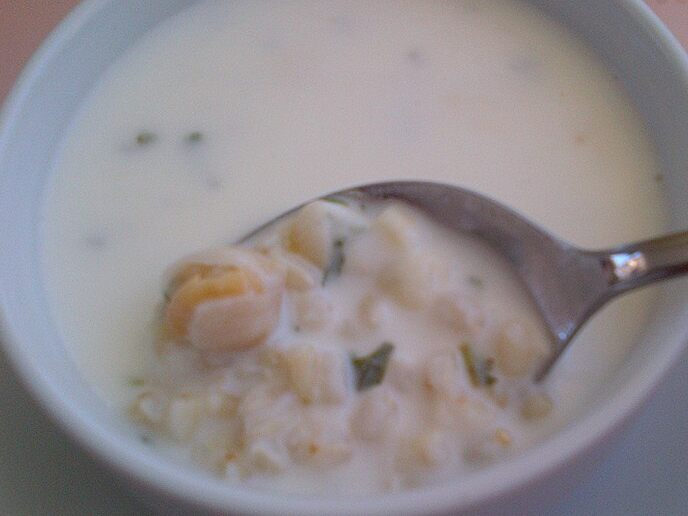
Cracked wheat and chickpeas are soaked overnight and cooked until soft; salt is added, then ayran made from strained yoghurt. According to the book it is eaten cold, but it can also be eaten hot with butter and dried mint.
Source: Amasya Mutfağı, p. 16.
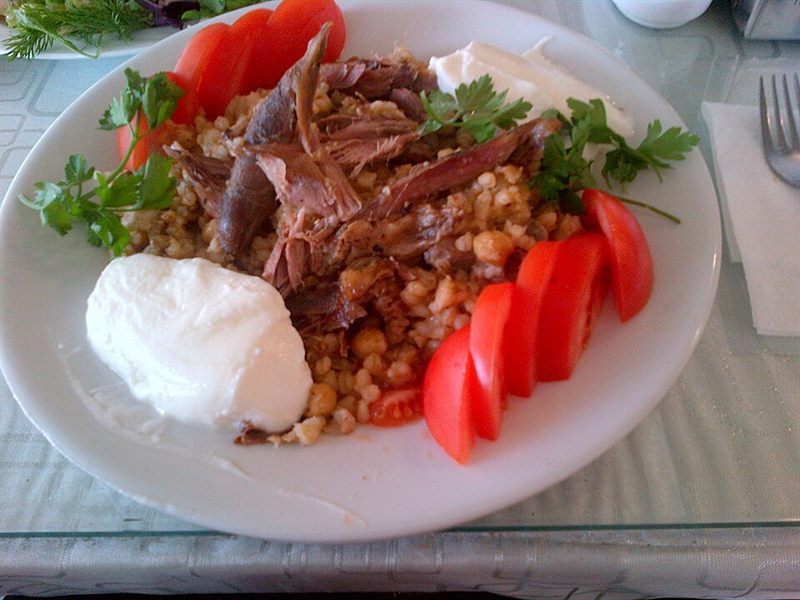
Photo: E4024, CC BY-SA 4.0, Wikimedia Commons. Keşkek as made in Tokat. According to the book, in the Amasya style too the ingredients stay separate on the plate; the recipe has no yoghurt or tomatoes.
Meat dish
Keşkek keşkek
Keşkek wheat (kendimelik), mutton, chickpeas, sheep's tail fat, çemen (a spiced fenugreek paste) thinned with water, salt and the marrow of two large bones go into an earthenware pot (cab); water is added to cover them by three fingers, the lid is sealed, and it cooks in the oven for 4-5 hours. The fat that rises to the top (bar) is made into a sauce with tomato paste and poured over each plate; tomato paste never goes into the pot itself. According to the book, around Merzifon everything is pounded into a paste, while in the Amasya manner each ingredient stays visible on the plate.
At the table: At village weddings, cauldrons of keşkek, pilaf, meat and halva are set to boil at the wedding house.
Source: Amasya Mutfağı, p. 6, 17.
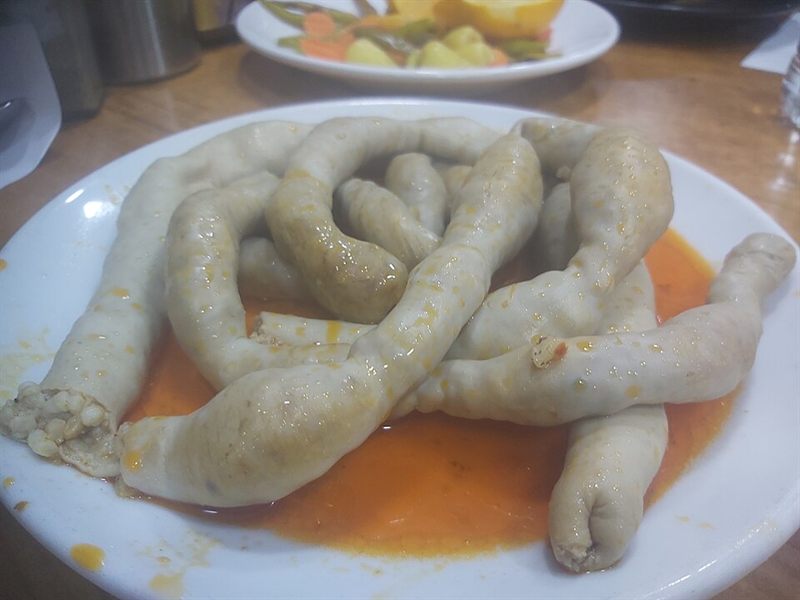
Photo: Tpinar, CC0, Wikimedia Commons. Representative photo. In Amasya, mumbar is cooked together with tripe and served in pieces of 2-3 cm.
Meat dish
Mumbar – İşkembe stuffed intestine and tripe
The mumbar (sheep's intestine) is cleaned, turned inside out and stuffed with bulgur, parsley, tomato paste, black pepper and salt. Palm-sized pieces of tripe are boiled for an hour in a separate pot and added to the mumbar; everything cooks for another 1-2 hours. Mumbar and tripe are cut into pieces of 2-3 centimetres and served together.
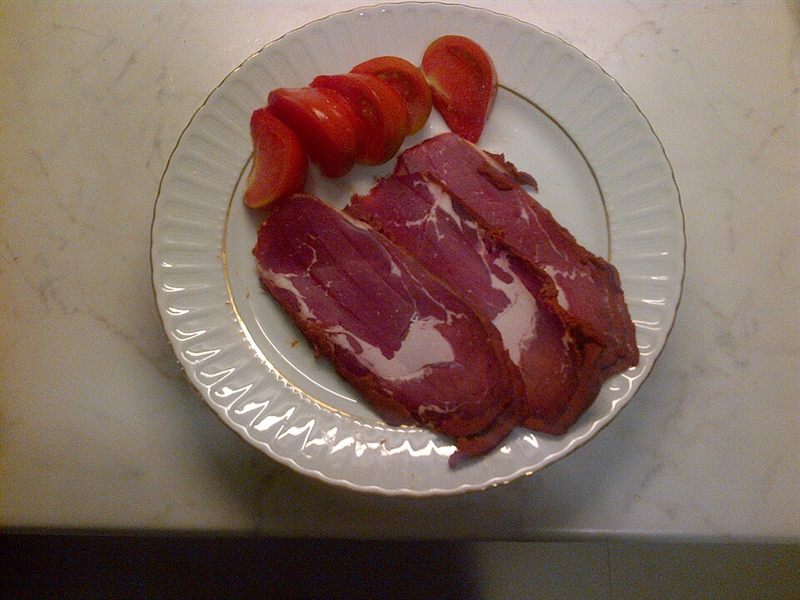
Onions are softened in oil. Pastırma sliced half a centimetre thick is cut into matchstick strips and laid, without breaking them up, over the onions. Half a cup of hot water is added, and it cooks covered over a low flame for 10 minutes and rests for 2 minutes. The book says it is served hot, with tea; lemon juice can be squeezed over it.
Source: Amasya Mutfağı, p. 19.
Meat dish
Yoğurtlu Akciğer Kavurma fried lung with yoghurt
Sheep's lung is diced to the size of backgammon dice (or put through the coarse plate of a mincer, the one called “hawk's eye”) and fried in oil, stirred with a wooden spoon. A cup of hot water is added and it softens, covered, over a low flame. It is served topped with garlic yoghurt and decorated with red pepper flakes.
Source: Amasya Mutfağı, p. 20.
Meat dish
Bütün Et “whole meat”
Mutton from the shoulder, cut into egg-sized pieces, is browned in fat. Tomato paste, salt and butter are added with water to cover, and it cooks, covered, over a low flame. When the meat is well done, chickpeas boiled in advance are added.
At the table: It is the second dish of the esteemed guest's table; in summer its place is taken by patlıcan pehli. It is also on the velime tray handed to the bride on the wedding night, and at the hacı karşılama meal given on a pilgrim's return.
Source: Amasya Mutfağı, p. 6-7, 21.
Meat dish
Hamur Yahnisi dumpling stew
A lamb's neck is boiled with soaked chickpeas, and once cool the meat is pulled off the bone in shreds. A runny batter of flour, egg, salt and water, as thick as boza, is dropped by the spoonful, in hazelnut-sized bits, into the boiling broth. The dumplings rise to the surface when cooked; tomato paste, salt and black and red pepper are added, and it is served hot.
Source: Amasya Mutfağı, p. 22.
Meat dish
Ayva Gallesi quince galle
Mutton neck and chickpeas are boiled; the meat is taken off the bone and fat, cut into small cubes and added, with the broth and chickpeas, to the quinces. Sugar goes in, it is brought to the boil once and served lukewarm: a sweetened meat dish that brings meat and fruit together. According to the book, apricot and plum galle are made the same way.
Source: Amasya Mutfağı, p. 23.
Meat dish
Şıngır Kebabı şıngır kebab
Aubergines peeled in stripes and cut into rings are left in salted water for 20 minutes; then they are threaded, alternating with salted lamb, onto şıngır skewers. When the wood fire has burned down to embers, the skewers go onto the şıngır, a spit turned by hand with a crank. Roasted green peppers are laid on the kebab, which rests for 15 minutes in a tepoşlu (a kind of lidded copper dish) and is served hot.
Source: Amasya Mutfağı, p. 24.
Meat dish
Kipe kipe
A sheep's large intestine (göden) is stuffed with bulgur, parsley and red and black pepper, tied at both ends with string and boiled in salted water. Once completely cold it is cut with a sharp knife into finger-thick slices, which are dipped in beaten egg, fried in hot oil and served hot.
Source: Amasya Mutfağı, p. 25.
Vegetable dish
Bakla Dolması broad-bean rolls
Dried broad beans, soaked the day before and skinned, are mixed with cracked wheat, bulgur, fatty minced meat with sheep's tail fat, onion, tomato paste, pepper, salt and oil. This filling is wrapped in leaves like little bundles, laid carefully over bones at the bottom of the pot and simmered; it is served with raw onion. The book introduces it as a dish “made nowhere but in Amasya”. While wrapping, a token such as an olive, a cherry or a small gold coin is hidden in one of them; it is said that whoever finds the token will have their wish come true.
At the table: Bakla dolması is also served at the bride's bath and at the meal given on the day neighbours gather to collect the silk cocoons (barama).
Source: Amasya Mutfağı, p. 6-7, 26.
Vegetable dish
Patlıcan Pehli aubergine pehli
Aubergines peeled in stripes are cut in three lengthwise and in three again crosswise, lightly fried in hot oil and laid in a tray. Peeled tomato rings go on top, and over them mutton ribs boiled in a little water, together with their broth. Salt and black pepper are added and it bakes until the meat browns and the liquid is absorbed.
At the table: In summer it takes the place of bütün et at the esteemed guest's table; pehli is also served at the hacı karşılama meal given on a pilgrim's return.
Source: Amasya Mutfağı, p. 6-7, 27.
Vegetable dish
Patlıcan Silkme “shaken” aubergine
Aubergines peeled in stripes (dalgır) are cut into rings, fried and laid in the bottom of the pot; onions fried in oil and bulgur go on top, and it is left to cook. No spoon is used: the pot is jolted to mix it (silkme means “shaking”). It cooks over a gentle flame with little liquid.
Source: Amasya Mutfağı, p. 28.
Vegetable dish
Patlıcan Oturtma aubergine oturtma
Aubergines peeled in stripes are cut into rings, salted to draw out their juice and fried. Minced meat is shaped into patties the size of the aubergine rings, and aubergine and patty go into the pot in turn. Fried long green peppers and tomato go on top, and it cooks quietly on its own over a low flame.
Source: Amasya Mutfağı, p. 29.
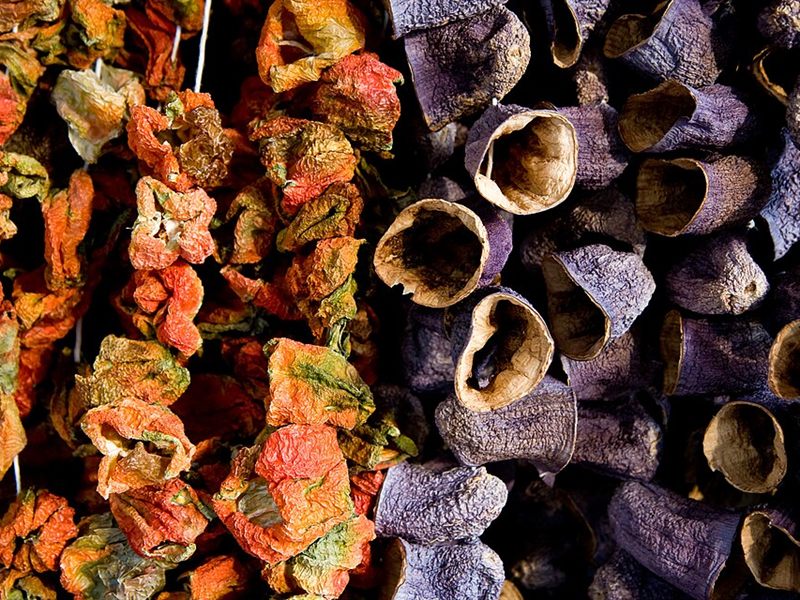
Photo: Garrett Ziegler, CC BY-SA 4.0, Wikimedia Commons (cropped). Not the dish itself but its main ingredient: dried aubergine. These were hollowed out for stuffing; according to the book, aubergines for this dish are cut into quarters and hung on a string to dry.
Vegetable dish
Patlıcan Kurusu Yemeği dried aubergine stew
Aubergines peeled in stripes are quartered, hung on a string and dried. The dried pieces are broken into 5-centimetre lengths, boiled well and drained. They are cooked over a low flame with minced meat fried with onion, cracked wheat, tomato paste and salt, and served with garlic yoghurt. According to the book, dried courgette is cooked the same way.
Source: Amasya Mutfağı, p. 30.
Vegetable dish
Patlıcan Turşusu Cilbiri pickled aubergine cilbir
Whole pickled aubergines are soaked in water to draw out the excess salt and vinegar, sliced into finger-thick rings and drained. They go into onions fried in oil and cook with peeled, roughly chopped tomato; it is eaten warm or cold. According to the book, the same dish is made with brined beans (fasulye diblesi).
Source: Amasya Mutfağı, p. 31.
Vegetable dish
Mücver mücver
The mücver in the book has no courgette in it: a batter is made of a bunch of chopped parsley, eggs, flour, salt and black pepper. It is ladled into hot oil in rounds the size of a tea saucer and fried on both sides. It can be eaten hot or cold.
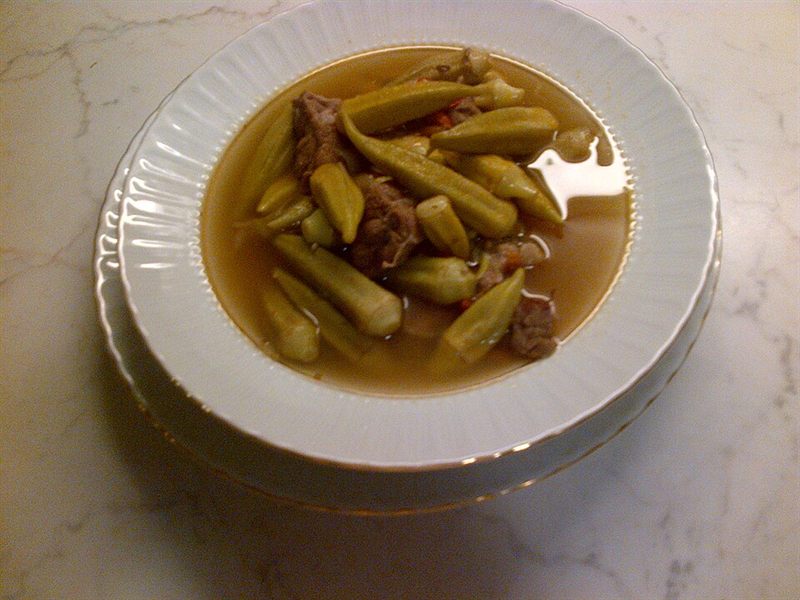
Fat, onion and lamb are fried together in a pot; washed and trimmed okra and tomato paste are added. Lemon juice (or citric acid) and salt go in and it cooks with little liquid; a crushed clove of garlic can be added. Dried okra is cooked the same way after being soaked in warm water, its threads removed and boiled.
At the table: Okra is the fifth dish of the esteemed guest's table.
Source: Amasya Mutfağı, p. 6, 33.
Vegetable dish
Taze Fasulye Kavurması fried green beans
Green beans snapped in three are added to minced meat fried in fat and tossed until they wilt; peeled, diced tomato, salt and black pepper follow. When done, lightly beaten eggs and chopped parsley are added, the lid goes on, and once the eggs set they are broken up with a wooden spoon. The book says it is served with tomato salad, ayran and tea from the samovar, and is also eaten wrapped in thin griddle bread (işkefe). Made with fresh peppers instead of beans, it becomes biber kavurması.
Source: Amasya Mutfağı, p. 34.
Vegetable dish
Kurutulmuş Dilme Fasulye dried sliced green beans
Green beans are slit lengthwise and dried in the shade. The dried beans are boiled until soft. Mutton on the bone is cooked until its liquid is absorbed and then fried with onion; the beans are added with tomato paste, salt, red pepper and hot water and cook, covered, over a low flame. It is served with garlic yoghurt.
The book gives this dish as “Pirpirim (Semizotu)”: pirpirim is purslane. Washed, trimmed and chopped purslane goes onto minced meat fried with onion; once it has wilted, rice, tomato paste and salt are added and it cooks, covered, over a low flame with a cup of water. According to the book, if fine bulgur fried in butter replaces the rice, it becomes pirpirim kavurması.
Source: Amasya Mutfağı, p. 36.
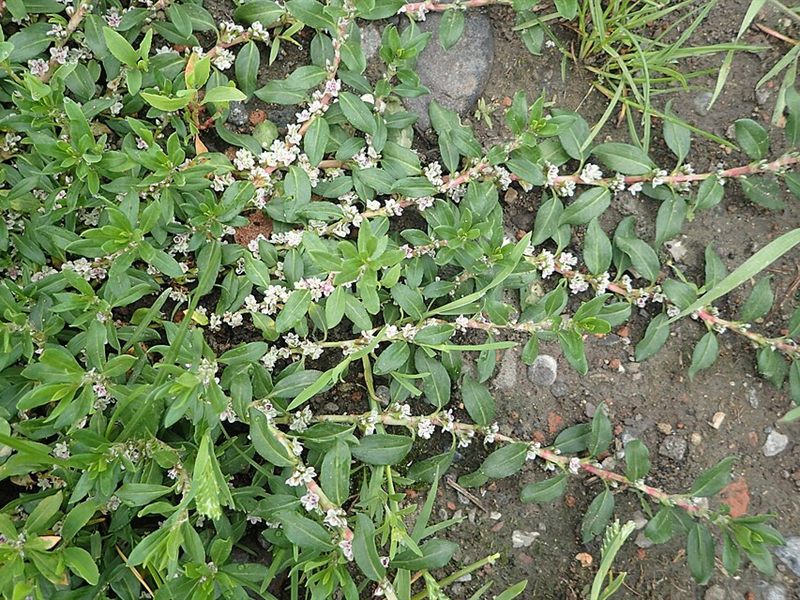
Photo: Krzysztof Ziarnek (Kenraiz), CC BY-SA 4.0, Wikimedia Commons (cropped). Not the dish itself but its main ingredient: the madımak plant (Polygonum cognatum).
Vegetable dish
Madımak madımak
Pastırma and tomato paste are added to onion fried in oil, then washed and chopped madımak (a leafy green) goes in. Hot water and cracked wheat are added and it is left to cook; it is served hot. A simple pot dish that brings greens and pastırma together.
Source: Amasya Mutfağı, p. 37.
Vegetable dish
Soğan Mıhlaması onion mıhlama
10 medium onions are diced and fried in a glass of oil until pink; minced meat (or pastırma), finely chopped peppers and tomatoes are added and fried well, then seasoned with black and red pepper and salt. The surface is smoothed and hollows are made, the eggs are cracked into them unbroken, and butter sizzled in another pan is poured over before serving.
Source: Amasya Mutfağı, p. 38.
Vegetable dish
Bat bat
There is no cooking in the recipe: ground walnuts, finely chopped spring onions and onion, tomato paste, red pepper, salt, düğü (fine bulgur for köfte) and water are mixed in a deep bowl. It is eaten wrapped in brined vine leaves or scooped up with bread. The book calls it an appetising dish, easy to make from natural foods.
At the table: Bat is also served at the bride's bath and at the meal on the day the silk cocoons (barama) are gathered.
Source: Amasya Mutfağı, p. 7, 39.
Vegetable dish
Kabak Kabuğu Kavurması fried courgette peel
Courgettes are washed several times, dried and peeled thickly, and the peel is cut into matchsticks. These go into finely chopped onion fried in oil with minced meat, and the pot is shaken rather than stirred; tomato is added, a hollow is made in the middle for the rice, and it cooks covered with hot water, salt and black and red pepper. A dish that makes use even of the peel.
Source: Amasya Mutfağı, p. 40.
Vegetable dish
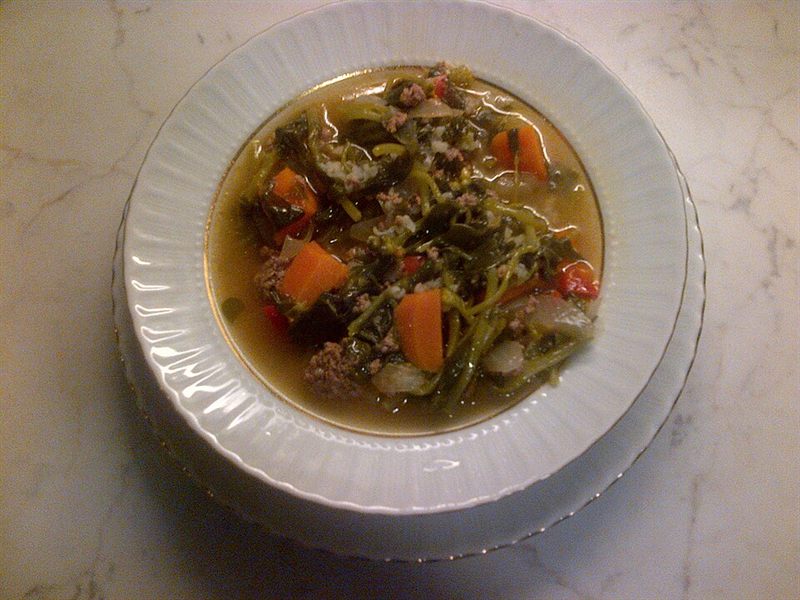
Pancar pancar greens
Ot pancarı is a green herb which, the book says, is also called kuş ekmeği (“bird's bread”). The cleaned, chopped greens go onto minced meat fried with onion and are left to wilt; bulgur, a little çemen (or, preferably, pastırma), salt and tomato paste are added, and it cooks covered over a low flame with hot water. It can be served with garlic yoghurt poured over it.
Source: Amasya Mutfağı, p. 41.
Vegetable dish
Kabak Çırpma courgette çırpma
Onion and minced meat are fried in a pan, and tomato paste and rice are added. Courgette rounds are arranged in a shallow pan with this mixture spread over and between them; with black pepper, salt, red pepper and a small glass of water it cooks over a low flame. Garlic yoghurt can be poured over it.
Source: Amasya Mutfağı, p. 42.
Pastry
Sinisu Böreği sinisu börek
A dough as soft as an earlobe is kneaded from eggs, salt, water and flour, rested for 30 minutes and divided into 8 balls, each rolled out as wide as a sini (a large round tray). The slightly dried sheets are boiled in salted water and plunged into cold water. They are layered in a buttered tray with butter between them and a cheese-and-parsley filling every second layer. Turned on its tray over the fire, it is browned underneath, flipped onto another tray and browned on the other side, then cut into small squares.
At the table: It is the fourth dish of the esteemed guest's table.
Source: Amasya Mutfağı, p. 6, 43.
Pastry
Sini Böreği tray börek
A soft dough of flour, water and salt is rolled out 1.5 centimetres thick, brushed with melted butter and rolled up. The roll is cut in three and each piece is rolled out as wide as a sini. In a greased tray the first two sheets are buttered and sprinkled with ground walnuts, and the third is laid on top and brushed with butter. Turned on its tray over the fire, it is browned first underneath and then on top.
Source: Amasya Mutfağı, p. 44.
Pastry
Köy Böreği village börek
It is made with the dough of sini böreği: buttered, rolled up, cut in three, each piece rolled out as wide as a sini. This time minced meat fried with parsley goes between the sheets. Turned on its tray over the fire, it is browned on both sides.
Source: Amasya Mutfağı, p. 45.
Pastry
Yakasal Böreği yakasal börek
Same dough, same folding: three sheets as wide as a sini. The first and second sheets are buttered between them, 10 beaten eggs are poured over the second and spread out, and the third is laid on top and brushed with butter. Turned on its tray over the fire, it is browned on both sides.
Source: Amasya Mutfağı, p. 46.
Pastry
İşkefe Böreği işkefe börek
A soft dough of egg, milk, salt and flour is divided into balls a little bigger than a walnut, rolled out as thin as possible and dried on a griddle (saç) without letting them brown much. When needed, these dried sheets are dampened to soften them and layered in a tray, lightly buttered, with the filling of your choice in the middle: minced meat, çökelek (dry curd cheese), potato, cheese or spinach. The top is brushed with an egg mixed with fat and it is baked until golden. According to the book it is also called yoka böreği.
Source: Amasya Mutfağı, p. 47.
Pastry
Nohudulu Amasya Çöreği Amasya çörek with chickpea leaven
Its leaven is made from chickpeas: chickpeas cracked in a mortar are put in a bottle with warm water and a teaspoon of sugar and left somewhere warm for 3 days, until foam spills from the neck of the bottle. With this chickpea leaven, flour, butter, walnuts and salt make a soft dough, cut into 15-16 egg-sized pieces, shaped into rounds, left to rise for half an hour and scored on top. When the buns have risen and formed a crust in the oven they are brushed with egg yolk and returned to the oven; this is done twice so they come out glossy and crisp.
Source: Amasya Mutfağı, p. 48.
Pastry
Burmalı Amasya Çöreği twisted Amasya çörek
The risen dough is divided into 4 balls; each is rolled out half a centimetre thick, spread with a paste of ground poppy seeds, oil and walnuts, and stacked one on top of another. The layered dough is cut into strips 5 centimetres wide, which are twisted and arranged in a greased tray in straight lines or rounds. They are brushed with beaten egg, cut every 10 centimetres, left to rest for 10 minutes and baked until golden.
Source: Amasya Mutfağı, p. 49.
Pastry
Puaça puaça
An unleavened dough kneaded with cold water is rested and rolled out thin; ground walnuts, white poppy seeds and butter are spread over it by hand and the dough is folded closed. It is brushed with egg, laid out on trays and baked. The book says it is very easy to make and a pleasure to eat in any season.
At the table: At the tesbih çekme gathering after a funeral, those present are offered Amasya çöreği, puaça and tea. Walnut puaça is served at the bride's bath, and simit, puaça, eli böğründe and sweets at the circumcision bath.
Source: Amasya Mutfağı, p. 7, 50.
Pastry
Yağlı (Katmer) yağlı, or katmer
A salted dough as soft as an earlobe is rested and divided into 5 balls, each rolled out thin and oiled. Ground walnuts and poppy seeds thinned with oil are spread over it, the edges pulled out by hand so that no spot is left bare. The sheet is rolled up from the edge, coiled like a simit and pressed back into a ball, then rolled out half a centimetre thick and cooked on both sides on an oiled griddle (saç), turning it; it is served brushed with butter.
At the table: If only one kind of food is to be offered at the silk-cocoon (barama) gathering, the griddle is set up and pastries such as yağlı, yanuç, kete and gömbe are served with tea from the samovar.
Source: Amasya Mutfağı, p. 7, 51.
Pastry
Kete kete
Sifted flour, crumbled yeast, salt and water make a soft dough that is left to rise. Fist-sized pieces are floured and rolled out with a rolling pin, spread all over with walnuts and oil and rolled up. The dough is pressed out 1 centimetre thick, brushed with egg yolk and baked one by one in a wood-fired oven until golden; it is brushed with butter as it comes out.
At the table: It is one of the pastries served with samovar tea when only one kind of food is offered at the silk-cocoon (barama) gathering.
Source: Amasya Mutfağı, p. 7, 52.
Pastry
Eli Böğründe “hand on hip”
It is prepared like kete; one end of the rolled dough is twisted around itself and the other in the opposite direction, so that the two ends meet side by side. It is pressed by hand 1 centimetre thick, brushed with egg yolk and baked over a wood fire until golden, then served brushed with butter. According to the book, because each piece is a single portion it is offered at barama meals and circumcision baths; it is easy to serve. (The name means “hand on hip”.)
Source: Amasya Mutfağı, p. 7, 53.
Pastry
Gömbe gömbe
A dough of flour, walnuts, ground poppy seeds, yeast, salt and sugar, kneaded with warm water, rises for 1-1.5 hours and is divided in two. One half is spread in a greased tray, the filling goes in the middle, the other half is spread over it, and the dough is closed like a bundle inside the tray. After rising a little more it is brushed with egg yolk, baked until golden and served in slices.
At the table: It is one of the pastries served with samovar tea when only one kind of food is offered at the silk-cocoon (barama) gathering.
Source: Amasya Mutfağı, p. 7, 54.
Pastry
Döndürme döndürme
Sifted flour, 2 eggs, salt and water make a soft dough. After resting it is rolled out wide, spread with finely ground walnuts and oil, and rolled up. The roll is cut into 6 equal pieces; each is stretched by hand and coiled around itself into a round, pressed out on an oiled surface to 15 centimetres across and fried in hot oil. The book says it is heavy to digest and very rich in energy, so it is preferred in the winter months.
Source: Amasya Mutfağı, p. 55.
Pastry
Yanuç yanuç
A dough as soft as an earlobe is kneaded from flour, yeast, salt and warm water; meanwhile finely chopped parsley is mixed with çökelek (dry curd cheese). The dough is divided into 6 balls and rolled out, the filling goes on one half of each sheet, and the other half is folded over into a half-moon. They are cooked on a griddle (saç) over a wood fire, turned over, and brushed with butter on the tray.
At the table: It is one of the pastries served with samovar tea when only one kind of food is offered at the silk-cocoon (barama) gathering.
Source: Amasya Mutfağı, p. 7, 56.
Pastry
Kaypak (Piruhi) kaypak, or piruhi
A soft dough of flour, egg and salt is divided into 4 balls, rolled out (not too thin) and cut into 5x5 centimetre squares. A filling of yoghurt and parsley goes in the middle of each and it is folded into a triangle, dusted lightly with flour and left to dry. They are dropped into boiling water, lifted out with a slotted spoon and served on plates with sizzling butter poured over them.
Source: Amasya Mutfağı, p. 57.
Pastry
Hengel hengel
A dough of flour, egg and salt is divided into four equal parts, rolled out, cut into 5x5 centimetre squares and folded into triangles (plain or with minced meat). They are boiled and laid on a wide serving dish; yoghurt with garlic and dried mint is poured over them, they are baked until golden and served brushed with butter.
Source: Amasya Mutfağı, p. 58.
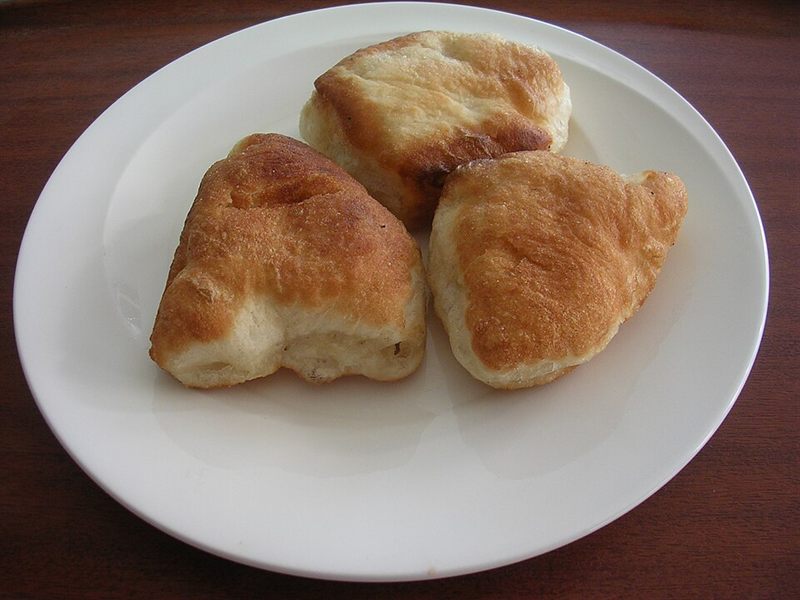
Photo: Honacan (Turkish Wikipedia), CC BY-SA 3.0, Wikimedia Commons. Representative photo; it may not match the Amasya recipe exactly.
Pastry
Pişi pişi
Flour, yeast, salt and warm water make a dough a little softer than an earlobe, which rises for about 1 hour. Fist-sized balls are patted out by hand on a board half a centimetre thick and fried in hot oil, turned over once. According to the book it is eaten in Ramadan, especially at sahur (the meal before dawn), with clear pekmez (grape molasses); çökelek can be put inside.
Source: Amasya Mutfağı, p. 59.
Pastry
Cırıkta (Akıtma, Cızlak) cırıkta, also akıtma or cızlak
Flour, butter, yeast, salt and water make a runny batter, as loose as lokma batter, which rises for 1 hour. A ladleful is poured onto a griddle (saç) heated over a wood fire and spread at once, cooked on both sides and buttered on the tray. It is dipped in clear pekmez. According to the book, another name for it is “krep” (crêpe).
Source: Amasya Mutfağı, p. 60.
Pastry
Ekmek Aşı (Papara) bread meal, or papara
It is made with stale bread. Minced meat and onion are fried; leftover pilaf if there is any, otherwise soaked rice, goes in, and it is boiled with 3 glasses of meat broth. Cubes of stale bread are spread on the bottom of the large tray (sini) or dish (lenger) that goes on the table, the soupy mixture is poured over them, and garlic yoghurt and dried mint go on top.
Source: Amasya Mutfağı, p. 61.
Pilaf
Erişteli Pilav rice with noodles
The erişte (noodles) are homemade: a dough of flour, water and salt is rolled out 3 millimetres thick and cut into strips 3 centimetres wide, and these into thin pieces of 2 millimetres, which are dried and toasted in the oven until pinkish. Rice soaked for 2 hours in warm salted water cooks with these noodles in boiling buttered water. According to the book it keeps you full for a long time, so it is eaten especially at sahur during Ramadan.
Source: Amasya Mutfağı, p. 62.
Pilaf
Kabak Kabuklu Pilav rice with courgette peel
The courgette peel is cut lengthwise in thick strips and then into matchsticks. These are added to onion and minced meat fried in fat and tossed until they wilt; a hollow is made in the middle of the pot for soaked rice and salt, and hot water is added. The pilaf cooks over a low flame, rests for 20 minutes and is served sprinkled with black pepper.
Source: Amasya Mutfağı, p. 63.
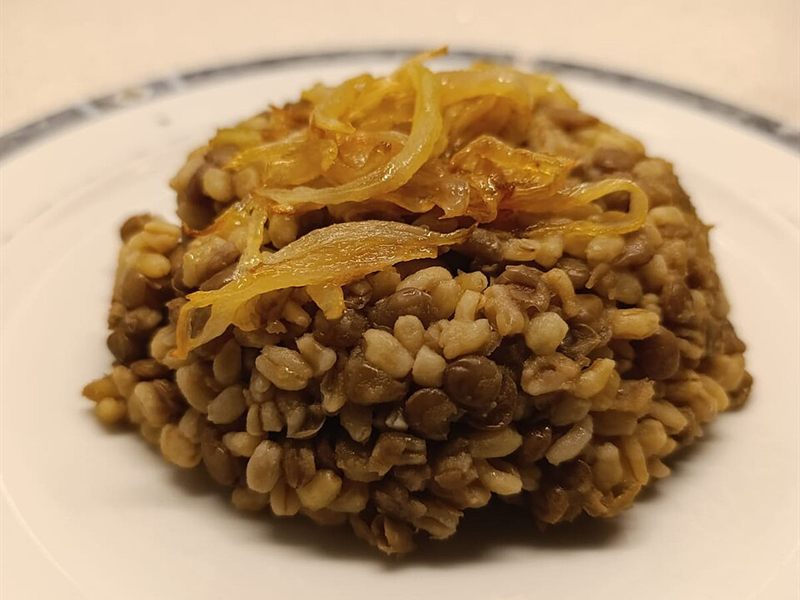
Photo: Caria Sekirman, CC BY-SA 4.0, Wikimedia Commons (cropped). Representative photo: lentil and bulgur pilaf as made in Hatay; it is not identical to the Amasya recipe.
Pilaf
Mercimekli Pilav lentil pilaf
It is made with bulgur, not rice: onion is fried in oil with tomato paste, 4 glasses of hot water and salt are added, and when it boils cooked green lentils and bulgur go in. After 20 minutes the heat is turned off and melted butter is drizzled over; it is stirred with a wooden spoon, and the pot is covered with a sheet of thick paper and left to rest. According to the book it can also be eaten with fresh or brined vine leaves.
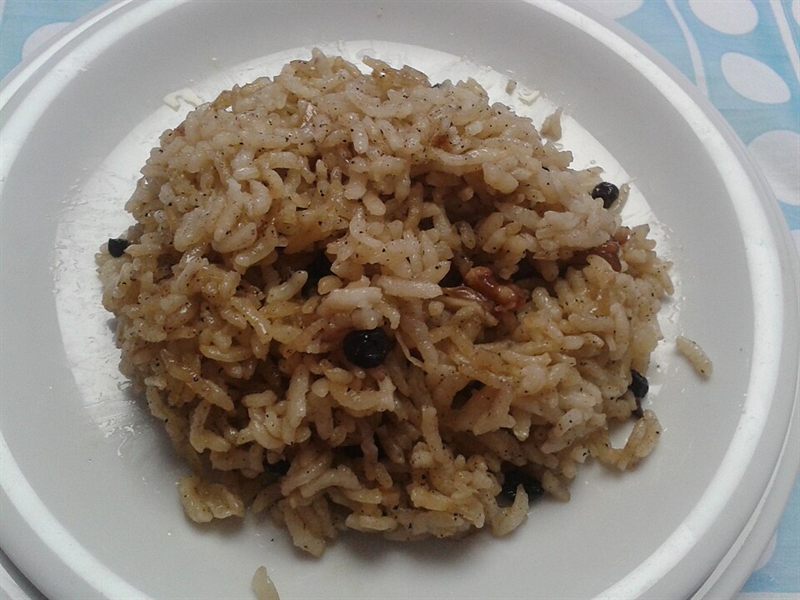
Onion is fried in oil, then pine nuts. In another pan sheep's liver diced to the size of backgammon dice is fried and currants are added. The rice cooks in boiling buttered water with the fried onion, pine nuts and liver; after resting for 20 minutes, black pepper and allspice are added and it is mixed with the handle of a wooden spoon.
Source: Amasya Mutfağı, p. 65.
Pilaf
Patlıcanlı Pilav aubergine pilaf
Aubergines, peeled completely and cut into cubes, are fried in oil. 2 glasses of hot water and salt are added, and when it boils the rice goes in to cook.
Source: Amasya Mutfağı, p. 66.
Pilaf
Süzme Bulgur Pilavı drained bulgur pilaf
6 glasses of water are brought to the boil in a wide pot, and 2 glasses of coarse bulgur are boiled until soft. It is drained into the serving dish, and 2 tablespoons of butter are melted, poured over and stirred in.
Source: Amasya Mutfağı, p. 67.
Dessert
Pâluze paluze
A sweet of starch, sugar and water. 4 glasses of water are boiled; starch mixed with 1 glass of water is added to the boiling water and stirred as it cooks. It is poured into a tray, drizzled with sizzling butter and sprinkled with walnuts. It is eaten hot or cold.
Source: Amasya Mutfağı, p. 68.
Dessert
Dene Hasudası dene hasudası
Wheat starch, pekmez and water are mixed into a coarse batter. It is added to butter heated in a copper pan and stirred with a wooden spoon, and the stirring goes on until it turns into small grains. It rests, covered, for a while and is served warm.
Source: Amasya Mutfağı, p. 69.
Dessert
Tırtıl Baklava “caterpillar” baklava
A dough as soft as an earlobe is kneaded from oil, egg, yoghurt and flour; walnut-sized balls are rolled out as wide as possible with starch-and-flour. Walnuts are scattered on each dried sheet, which is rolled around the rolling pin, pushed from both ends towards the middle into a crinkled roll, and the pin is pulled out; its other name in the book, oklavadan sıyırma (“stripped off the rolling pin”), describes exactly this. The crinkled rolls are laid in a tray without spoiling their shape, dried for 1 day, cut at even intervals, and baked pale golden under sizzling fat. Both syrup and pastry are cold when the syrup is poured.
At the table: It is on the velime tray handed to the bride on the wedding night, and among the desserts of the esteemed guest's table.
Source: Amasya Mutfağı, p. 6, 70.
Photo: E4024, CC BY-SA 3.0, Wikimedia Commons (cropped). Representative photo; it may not match the Amasya recipe exactly.
Dessert
Kalbura Bastı (Halbur Tatlısı) kalburabastı
A well is made in the flour; butter, eggs, salt, yoghurt and vanilla go in and it is kneaded as soft as an earlobe. Egg-sized pieces are filled with walnut and shaped by rolling them by hand on the back of a sieve; the name describes this, meaning “pressed on the sieve”. They bake at 150 degrees for 30-35 minutes, and cold syrup is poured over them.
Source: Amasya Mutfağı, p. 71.
Dessert
Kuymak kuymak
In the book, kuymak is a sweet: butter is heated in a pot, pekmez is added and brought to the boil. Sifted flour is added to the boiling mixture and it is stirred constantly until it has the consistency of halva. It is served hot.
At the table: It is one of the desserts of the esteemed guest's table.
Source: Amasya Mutfağı, p. 6, 72.
Photo: E4024, CC BY-SA 4.0, Wikimedia Commons. Representative photo: flour biscuits. According to the book, in Amasya they are shaped like daisies and dusted with icing sugar.
Dessert
Şeker Böreği (Un Kurabiyesi) “sugar börek”, or flour biscuits
Butter, melted and slightly cooled, is beaten with icing sugar until pale, and flour is worked in little by little. The book gives the test for the texture: roll a piece in your palm and press the middle lightly; if the edges crack a little, it is right. They are shaped like daisies and baked at 150 degrees for 15 minutes; the oven is switched off and they are left inside until cool, then dusted with icing sugar. Because they keep for a long time, they are ideal for a journey.
At the table: At the “bride's mirror” ceremony, the woman who brings the mirror is sent off with şeker böreği in a large decorated dish.
Source: Amasya Mutfağı, p. 7, 73.
Dessert
Yoka Tatlısı yoka dessert
A rich dough of egg, milk, oil, salt and flour is divided into walnut-sized balls, rested for 1 hour, rolled out as wide as possible and dried on a griddle, turned again and again so that they do not brown. When the dessert is to be made the sheets are moistened with water, filled with walnuts and shaped, or simply laid flat in a tray. It is baked until pinkish and cold syrup is poured over it.
Source: Amasya Mutfağı, p. 74.
Dessert
Elma Tatlısı apple dessert
It is made with misket apples, which the book's English describes as a small kind of apple native to the region. The apples are peeled and cored and boiled for 15 minutes; they are brushed with food colouring, filled with walnut and cinnamon and baked for 15 minutes. As they cool they are decorated with whipped cream, and they are served cold.
Source: Amasya Mutfağı, p. 75.
Dessert
Vişneli Ekmek sour-cherry bread
Stale bread is sliced 1 centimetre thick, buttered generously with soft butter and toasted pink in the oven. Stoned sour cherries are cooked with 2 glasses of sugar, and the toasted bread is cooked in the cherries' own syrup. When cool, the slices are arranged on a serving dish and covered completely with the syrupy cherries, sprinkled with walnuts and served cold.
At the table: The book tells how a cream cake eaten in the princes' palace became vişneli ekmek in the hands of a poor family; this is an account handed down, not a document.
Source: Amasya Mutfağı, p. 6, 76.
Dessert
Höşmerim höşmerim
Butter is melted and flour is toasted in it to a halva-like consistency. Pekmez syrup thinned with water is added and it cooks for 5 minutes, stirred so that it does not turn grainy. It is served warm on a dish sprinkled with walnuts; a hollow can be made in the middle of each portion and filled with clear pekmez.
Source: Amasya Mutfağı, p. 77.
Dessert
Pekmezli Yumurta eggs with pekmez
Butter is melted in a pan and grape pekmez is added. When it starts to boil, eggs beaten until white and yolk are blended are stirred in; it is cooked and served hot.
Source: Amasya Mutfağı, p. 78.
Dessert
Elma Hoşafı apple compote
Apples (dried misket apples will do too) are boiled in plenty of water, sugar is added and they cook; it is taken off the heat and served cold, with a few cloves if desired. If dried apples are used, they are first soaked and washed, then boiled in plenty of water until soft.
Source: Amasya Mutfağı, p. 79.
Dessert
Unutma Beni “forget me not”
Pekmez and sugar are cooked together until they become a syrup. Slices of village bread go into the syrup and cook on both sides; lifted out with a slotted spoon, they are served with walnuts poured over them.
At the table: According to the book, it was born so that stale bread would not be thrown away.
Source: Amasya Mutfağı, p. 6, 80.
Dessert
Teltel (Pişmaniye) teltel
Sugar, water and citric acid are boiled until light brown; when a spoonful dropped into a bowl of cold water hits the bottom with a “tak”, it is ready. The set syrup is pulled by hand until white, made into a ring, and stretched in a basin of flour toasted in butter by 3-4 people pulling towards the rim; as the ring lengthens it is folded in two. When the strands are completely fine (after 20-22 rounds) they are cut. If the flour runs short the syrup sticks; teltel pulled fewer than 19 rounds has strands too thick to eat, and reaching that number takes skill and patience. According to the book it is a special winter sweet, pulled and eaten among a crowd of guests; although it resembles pişmaniye, it is quite different.
Source: Amasya Mutfağı, p. 81.
Dessert
Gömlek Kadayıfı gömlek kadayıfı
Fresh kadayıf, specially poured in a net-like sheet, is cut into rectangles; walnuts, sugar and cinnamon are put between them and they are rolled up. The rolls are dipped in beaten egg, fried pinkish on both sides in hot fat, and dropped while hot into cold syrup for 5 minutes. They are served decorated with kaymak (clotted cream) or walnuts.
At the table: It is one of the desserts of the esteemed guest's table.
Source: Amasya Mutfağı, p. 6, 81.
Speciality
Patlıcan Çullaması aubergine çullama
Aubergines, bell peppers and tomatoes are charred over a fire, peeled and finely chopped. Onions cut into half-moons, finely chopped parsley and garlic are mixed in with everything else, and it is served.
Source: Amasya Mutfağı, p. 82.
Speciality
Borani borani
The borani in the book has no vegetables in it: it is yoghurt and eggs. Strained yoghurt (katık) is softened with water, and finely chopped garlic and dried mint are added. Eggs are cracked one by one into boiling water with salt and a teaspoon of vinegar, poached, and lifted onto the serving dish with a slotted spoon. When all the eggs are done the yoghurt mixture is poured over them; it is served cold.
Source: Amasya Mutfağı, p. 83.
Speciality
Dolma İçi “dolma filling”
Sheep's tail fat cut into sugar-cube pieces is fried to render the fat; the crisp bits are strained off and pounded while hot. Finely chopped pastırma is added to onion fried in a small glass of oil; cooked green lentils, cracked wheat, hot water, the pounded cracklings and spices (black and red pepper, cumin, garlic) go in. When it has the consistency of pilaf the heat is turned off, chopped parsley is added and it is served hot. According to the book it can also be wrapped in vine leaves like little bundles and eaten as dolma.
Source: Amasya Mutfağı, p. 84.
Speciality
Kesme Ev Makarnası homemade cut pasta
According to the book, what makes this pasta special is that its dough is kneaded with eggs alone. The dough is rolled out with a rolling pin and cut into strips 3-4 centimetres wide; the strips are stacked and cut crosswise as thin as matchsticks, then dried on cloths. It is boiled like ordinary pasta and served with nothing but butter poured over it; the book likens its taste to su böreği. Homemade pasta is also called erişte, but according to the book Amasya's erişte is different.
Source: Amasya Mutfağı, p. 85.
Speciality
Cilbir cilbir
The cilbir in the book is a noodle dish with egg and minced meat. Minced meat is fried in butter and the eggs are cracked into it. Tomatoes, peeled and diced to the size of backgammon dice, are added with water and brought to the boil. When the water boils the homemade noodles (erişte) go in and cook until soft, and it is served hot.
Source: Amasya Mutfağı, p. 86.
Sources
Every piece of information on this page rests on the source below. Its title is
given in the original so that it can be found; quotations from it are our
translations, except where we say that the book's own English is quoted.
H. Harun Yörgüç (ed.), Amasya Mutfağı / Amasya Cuisine, 2. Basım (Amasya: Amasya Valiliği, 2010), 6-7, 8-87. — Pages 6-7 (“Amasya Yemekleri Tarihçesi”): the six dishes of the esteemed guest's table and their order, the velime meal (“guya önü”), the wedding, bride's bath, barama, pilgrim's welcome and other ceremonial meals; what is said about vişneli ekmek, unutma beni, bakla dolması and keşkek. Pages 8-87: the names and recipes of the eighty dishes; the page of each dish is given at the foot of its card. The English dish cards were translated from the Turkish recipes, not from the book's own English, which has some errors (it calls poppy seeds “hashish” and courgettes “cucumbers”).
The book is a publication of the Governorship of Amasya (Publication No. 42). The
recipes were compiled with contributions from vocational high-school teachers,
master instructors, cooks and housewives. In other words, the names you read here
rest on a compilation, not on hearsay.
The cards are introductions, not recipes. Quantities and the full recipes are in the book. Other products of the city, such as the Amasya apple and silk-worm breeding, are also waiting for sections of their own.