Adım Adım Amasya

Monuments of the city · Mosque

Küçük Ağa Mosque

The endowment deed of this mosque survives. In it is written that the teacher will take money from no one — and that the caretaker will renew the rope of the well.

1495 Şamlar neighbourhood North bank
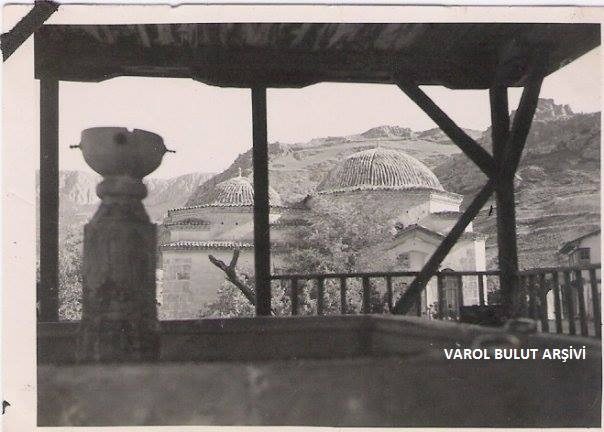
Küçük Ağa Mosque: square prayer hall, tiled dome and three-section late-comers' portico
Küçük Ağa Mosque. Varol Bulut Archive (Kültürel Miras Boyutuyla Amasya, Photo 10).

“Küçük Ağa” is not a building's name but a nickname

In the sources this building appears under four or five different names, and at first sight one might think there were several different buildings. There are not. All of them describe the same complex, because “Küçük Ağa” (the Lesser Agha) is the nickname of Ayas Ağa, the Agha of the Gate (Kapı Ağası) who founded the complex.1, 2

Küçük Ağa Camiiits popular name
Ayas Ağa Camiiafter its founder
Şamlar Camiiafter its neighbourhood
Şamlılar Medresesifor its madrasa
Medrese-i Ayasiyyein the waqf records

A note: The book (p. 38) attributes the building to the Agha of the Gate Hüseyin Ağa,3 and takes this from its source, Kemaloğlu's thesis.4 But four separate sources we have agree that the founder was Ayas Ağa: Okudan in an article devoted to this waqf,1 Akgül directly, writing “Ayas Ağa, the Agha of the Gate, also known as Küçük Ağa”,2 Uzundal in his table of mosques,5 and Oltulu in his record card.6

The reason for the confusion is very probably this: Hüseyin Ağa is the founder of the Büyük Ağa Madrasa. With Büyük Ağa (the Great Agha) and Küçük Ağa standing side by side, the two seem to have been mixed up.

📜 What do the documents say?

There was another mosque here first: a building put up by Melik Gazi of the Danishmendids. When in time it became unusable and was pulled down, a complex was built in its place by Ayas Ağa.1, 3, 6

The complex was founded in AH 900 / AD 1495 and consisted of a school, a madrasa and a mosque.1 In the endowment deed Ayas Ağa is introduced as “the freedman of Sultan Bayezid II”.1

The mosque is square in plan and covered by a dome clad in grooved roof tiles; triangles were used in the transition to the dome. On the north side there is a late-comers' portico in three sections.4 The madrasa has nine cells around the courtyard to the north of the mosque (six on the north, three on the west); its plan, like a typical Ottoman madrasa, is a U with one shorter arm, and in front of the cells there is a portico with marble columns.7

And most important of all: the endowment deed (vakfiye) of this complex has survived.1 The section below comes from that document.

What does the endowment deed say?

An endowment deed does not just say “I had this built”. It sets out, one by one, who will work here, what qualities will be required of that person, what work they will do and what they will receive in return. Written in 1495, this document can still be read five hundred and thirty years later.1

3.027 g1 dirhem — both a weight and a unit of money1
≈ 513 kg1 müd1
MerzifonThe wheat for the wages came from villages there1

Notice this: the wages are not made up of money alone. Every member of staff receives a share of the wheat harvested in villages in Merzifon.1 So the teacher of a school in one neighbourhood of Amasya was tied to the crop of a field many kilometres away. That is how the waqf system worked.

While you are there, look for

Key facts

Built
AH 900 / AD 14951, 3, 5
Commissioned by
İyas (Ayas) Ağa, Agha of the Gate — nicknamed “Küçük Ağa”1, 2, 5, 6
Earlier building
The mosque of Melik Gazi of the Danishmendids; when it fell, the complex was founded in its place1, 3, 6
Parts of the complex
Mosque, madrasa, school1
Other names
Ayas Ağa Camii · Şamlar Camii · Şamlılar Medresesi · Medrese-i Ayasiyye1
Plan
Square prayer hall, tiled dome, late-comers' portico in three sections4
The madrasa
Nine cells, U plan with one shorter arm, portico with marble columns7
Endowment deed
Has survived1
Location
40.658753, 35.8332952 — verified from an external source
In the book
Kültürel Miras Boyutuyla Amasya, p. 38

📍 Open on the map

Sources

  1. Muhammet Okudan, “Ayas Ağa Vakfı ve Amasya Küçük Ağa Külliyesi”, Kastamonu Üniversitesi İlahiyat Fakültesi Dergisi 9/2 (Eylül 2025), 58-73; 58, 61-62. — The article devoted to this waqf: the founding of the complex (AH 900 / 1495), its names, Melik Gazi's earlier mosque, the survival of the endowment deed and its staffing conditions.
  2. Öznur Akgül, Tarihi Varlıkların Sürdürülebilir Turizm Açısından İncelenmesi: Amasya Şehri Örneği (Samsun: Ondokuz Mayıs Üniversitesi Sosyal Bilimler Enstitüsü, Yüksek Lisans Tezi, 2020), 50. — “Ayas Ağa, the Agha of the Gate, also known as Küçük Ağa”.
  3. Kültürel Miras Boyutuyla Amasya (Amasya: Amasya Üniversitesi, BAP Projesi SEB-BAP25-0233, 2026), 38.
  4. Zeynep Kemaloğlu, Amasya Mihrabları (Kayseri: Erciyes Üniversitesi Sosyal Bilimler Enstitüsü, Yüksek Lisans Tezi, 2016), 149. — The plan of the mosque and the late-comers' portico. Note: on the same page the founder is given as “Kapıağası Hüseyin Ağa”; this is the record the book relies on.
  5. Edip Uzundal, Sultan II. Abdülhamid Dönemi'nde Amasya Sancağı (Tokat: Gaziosmanpaşa Üniversitesi Sosyal Bilimler Enstitüsü, Doktora Tezi), 166. — Table of mosques: “Şamlar / Ayas / Küçük Ağa Camii — 1495 — Kapı Ağası Ayas Ağa”.
  6. Ersel Oltulu, Amasya'nın Anıtsal Eserleri ve Hızır Paşa Külliyesi Restitüsyon ve Koruma Önerisi (İstanbul: Yıldız Teknik Üniversitesi Fen Bilimleri Enstitüsü, Yüksek Lisans Tezi, 2006), 54. — “When the mosque built by Melik Gazi fell down, it was built by Kapu Ağası Ayas Paşa.”
  7. Handan Aytekin, “Küçük Ağa Külliyesi”, Türkiye Turizm Ansiklopedisi (2020), turkiyeturizmansiklopedisi.com (Erişim 24 Eylül 2026). — The nine cells of the madrasa, its U plan and its portico with marble columns. As an online entry, it has no page numbers.