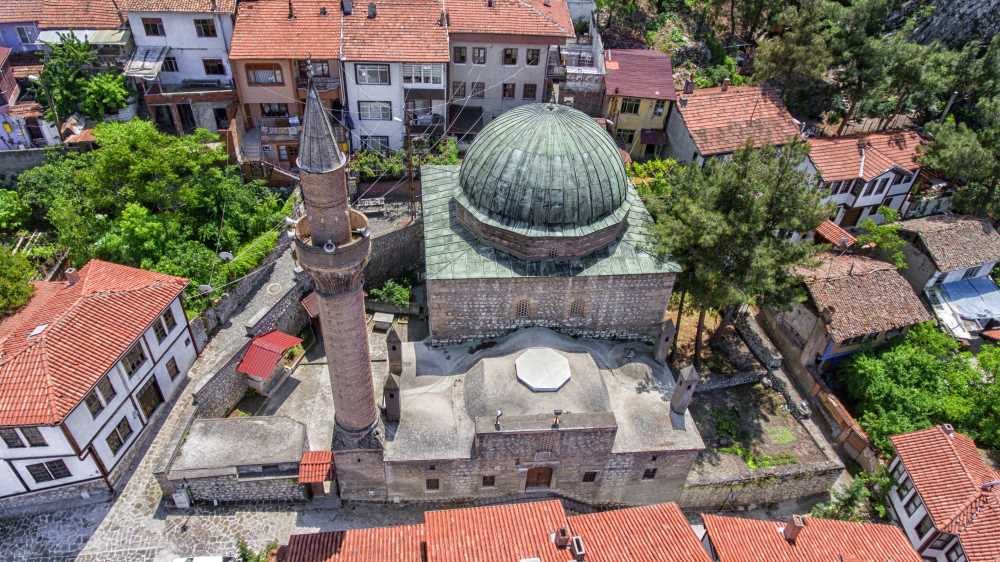
📜 What do the documents say?
According to its inscription, the mosque was built in 1502 by
Abdullah Paşa, who was Beylerbeyi (governor-general) in the time of Sultan
Bayezid II.1
The building is one of the Amasya examples of the group known as
“multi-functional” or “zaviye-type” mosques.1 That is, it was
designed not only for worship, but with the lodging and service needs of a dervish
community in mind.
The building's signature is its minaret. Within alternating courses of
stone and brick, a geometric decoration has been made by laying the bricks
diagonally. This is the most striking feature of the building.1
🗣️ What do the people say?
A memorate is recorded that is attached not to the mosque itself but to a saint's
grave (yatır) in Sofular. The saint's name is Softa Baba; today the
grave lies in the courtyard of a school.2
When the school was to be rebuilt, they wanted to move the grave from where it
lay. One day, as the headmaster sat in his office, an old holy man with a
white beard appeared at the door:
“Do not disturb me.” (“Beni rahatsız etmeyin.”)
With these words he vanished.
In the narrative, Murat Karaaslan is named as the witness of the
event.2
This is a memorate — an event the narrator believes really happened, with a
witness named. It is not a document; it is passed on here as it was told, with
respect.