Adım Adım Amasya

Water and Healing Route · Stop 6

Helkıs Bridge

A bridge's name changes with whatever is built opposite it. This bridge had been here since Roman times; when the Government House rose opposite it in 1864, its name changed too.

Roman in origin 1940 · reinforced concrete Government Bridge
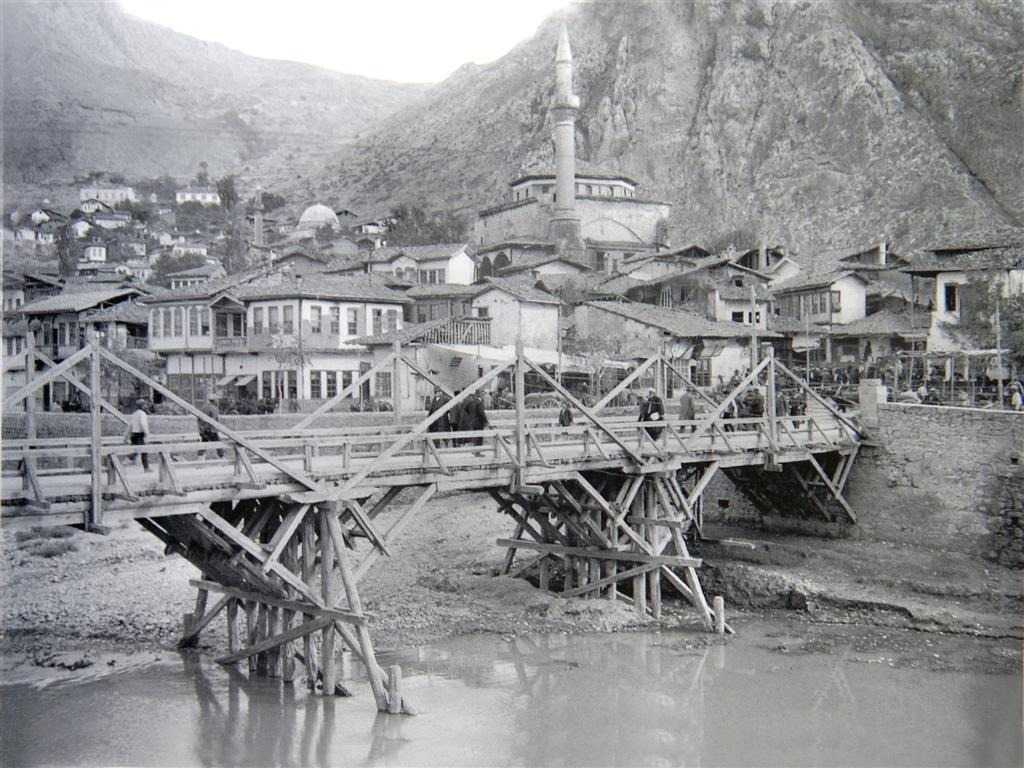
The crowded Helkıs Bridge standing on timber piers; pedestrians on the bridge, houses with bay windows on the opposite bank, a minaret and the rock of Harşena behind
Helkıs Bridge in its timber form. Both the piers and the deck are timber: diagonal braces on piles driven into the water. The bridge is crowded; on the opposite bank, houses with bay windows, a minaret and, behind, the rock of Harşena. The book says the bridge was of timber when it was first built;1 the picture shows exactly that state. Emir Gültekin Archive (Photo 25 in the book).

📜 What do the documents say?

This bridge, known to have existed since the Roman period, is referred to in historical sources as the “Helkıs Bridge” or the “Serkis Bridge”, because it lies near the castle's “Helkıs Gate” and was used heavily by the residents of the Helkıs neighbourhood. It stands opposite today's government house. It is a masonry structure.2

The bridge, which was of timber when first built, was repaired several times; in 1940, when it had become completely unusable, it was rebuilt in reinforced concrete by Governor Talat Öncel.1 In the process the bridge acquired a modern identity, linking the city's bureaucratic centre and its residential areas.
How did its name change?

When Ziya Paşa built the Government House (Hükümet Konağı) on the north side of the bridge in 1864-1865, the structure took the name “Hükümet Köprüsü” — the Government Bridge.1

Helkıs→ Serkis→ Government Bridge

The first two names come from the neighbourhood and the castle gate: the bridge was known by the people who crossed it.2 The third name comes from the state. It is a small summary of what was happening in 19th-century Amasya: the same Ziya Paşa had the Alçak Bridge renewed in the same years.

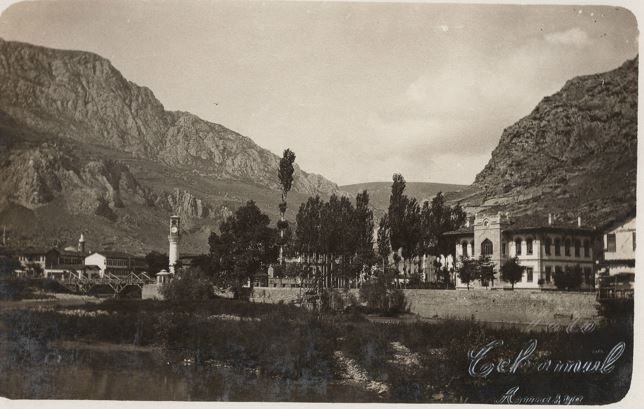
On the left the timber bridge and the clock tower, on the right the large white Government House, Harşena behind
On the left the timber bridge and the clock tower, on the right the Government House. This is the building the bridge's third name comes from.1 Old Amasya archive.
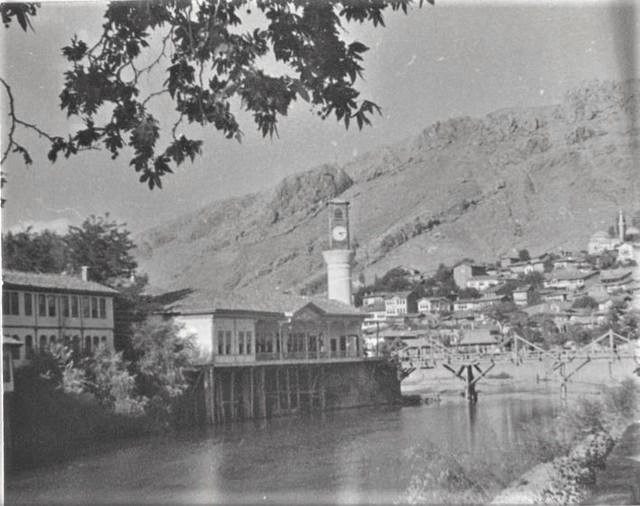
The bank of the Yeşilırmak in 1937: the clock tower on the rock, the timber bridge on the right, buildings on timber posts along the bank
1937. On the right the timber bridge, in the middle the clock tower, along the bank buildings resting on timber posts. In 1940 this timber deck was replaced in reinforced concrete.1 Hüseyin Menç Archive.

In order

Stop in the middle of the bridge and look both ways

This bridge links two different faces of the city: on one side the bureaucratic centre — the government house, official buildings; on the other the residential areas, the Helkıs neighbourhood.1

The concrete under your feet is from 1940.1 But the spot you are standing on has been a crossing since Roman times.2 The bridge has been known by three names, and its material has changed at least twice — the only thing that has not changed is that people cross the river here.

While you are there, look for

Key facts

Origin
Roman period2
Other names
Serkis Köprüsü; Hükümet Köprüsü (Government Bridge)1, 2
Present form
1940 — reinforced concrete, Governor Talat Öncel1
Change of name
1864-65, construction of the Government House1
Position
Opposite the government house2
Coordinates
40.652705, 35.833525 — verified against OpenStreetMap
In the book
Kültürel Miras Boyutuyla Amasya, p. 57

📍 Open on the map

Sources

Every factual statement on this page rests on one of the sources below. Titles are given in their original Turkish so that they can be found; quotations from them are our translations.

  1. Amasya Harşena Dağı ve Pontus Kral Kaya Mezarları Alan Yönetim Planı ve UNESCO Dünya Mirası Başvuru Dosyası (Amasya: Amasya Belediyesi, 2022), 63.
  2. Ahmet Caner Çatal, 19. Yüzyılın İkinci Yarısında Amasya Şehri'nin Demografik Yapısı ve İskân Siyaseti (Niğde: Niğde Üniversitesi Sosyal Bilimler Enstitüsü, Yüksek Lisans Tezi, 2009), 11.